Custom headboard ideas: when the bed becomes architecture
Custom headboard ideas that treat the bed as architecture: dimensions, integrated bedside surfaces, lighting and the right material.
A bought headboard is a panel that leans against the wall behind a bed. A drawn one is different: it is designed as a single piece of architecture, sized to the room, the mattress and the wall it will live on. Custom headboard ideas worth pursuing usually start there — not with a shape from a catalogue, but with the bed as the centre of a room that has its own proportions, its own light and its own wall to fill. What follows is how that drawing is actually made, from the first measurement to the material that will sit against your pillows.

A headboard drawn as one piece
The most useful shift in thinking is to stop seeing the headboard as an object placed in the room and start drawing it as part of the wall. A panel that runs the full width of the bed wall, from one side to the other, reads as architecture rather than furniture — it changes the proportions of the whole room, not just the space above the pillows. In a bedroom with an awkward wall, an off-centre window or a radiator that never sat where anyone wanted it, a full-width panel absorbs those irregularities into one calm surface instead of leaving them exposed on either side of a narrow bought headboard. In a bedroom where every wall counts, the headboard is often the first decision in a wider small bedroom layout.
Dimensions start with the mattress, not the wall
A headboard drawn to measure begins with the mattress, not the room. Its width sits a little wider than the bed itself — ten to twenty centimetres either side is usually enough to read as a deliberate proportion rather than a panel that happens to match. Its height above the mattress decides how much of the wall becomes part of the composition: sixty centimetres feels calm and contemporary, while a panel that climbs a metre or more gives the bed a sense of presence closer to a piece of panelling. None of these numbers are fixed rules: they are decided against your actual mattress, your actual ceiling height, and the exact wall you are drawing against.
A headboard drawn as one piece stops being furniture and becomes part of the wall.
Bedside surfaces built into the panel
One advantage a drawn headboard has over a bought one is that it does not have to stop at the edge of the bed. A shelf or a small worktop can be built directly into the panel on either side, at the height that suits a lamp, a glass of water and a book, without the gap that a separate nightstand always leaves against the wall. Some panels step forward into a full bedside table; others simply widen by a few centimetres at exactly the right height. Either way, the surface belongs to the same drawing as the headboard, so nothing looks added on afterwards.
Lighting drawn into the headboard
Reading light is one of the most common reasons a headboard gets redesigned rather than bought. A recess for a wall light, a channel for the cable, or a shelf deep enough to hide a lamp base can all be decided at the drawing stage, so the light is part of the panel rather than a cord running down the wall. The wiring itself stays backstage — it is our concern, and you will not need to think about it. What you see is a headboard where the light simply belongs, switched from exactly where your hand rests.
Materials: an oak panel or upholstered linen
Two families of material cover most custom headboard ideas, and they say different things about the room. Solid or veneered oak gives a headboard the same presence as a piece of panelling: warm, structured, and matched easily to a bookcase or a wardrobe designed for the same room. Upholstered linen, over a padded panel, softens the wall instead — closer to the bed itself, quieter against the pillows, and kinder to a bedroom that already has a lot of hard surfaces. A third option sits between the two: an oak frame with an upholstered centre panel, which keeps the structure of a drawn piece while softening the part your head actually touches. All three age well when built properly, and all three can carry the bedside shelf and the lighting described above.
What the headboard hides
A full panel does more than look considered: it also covers what you would rather not see. A socket placed slightly off, a patch of wall that was never quite finished, a radiator pipe running up from the floor — a headboard drawn to the room can be sized and positioned to absorb all of it behind one clean surface, rather than working around each detail separately. The same panel can also hide the cables for the reading lights described earlier, so nothing runs visibly down the wall on either side of the bed. It is a small point, but it is often what makes a finished bedroom feel resolved rather than merely furnished.

Seeing the headboard before it is made
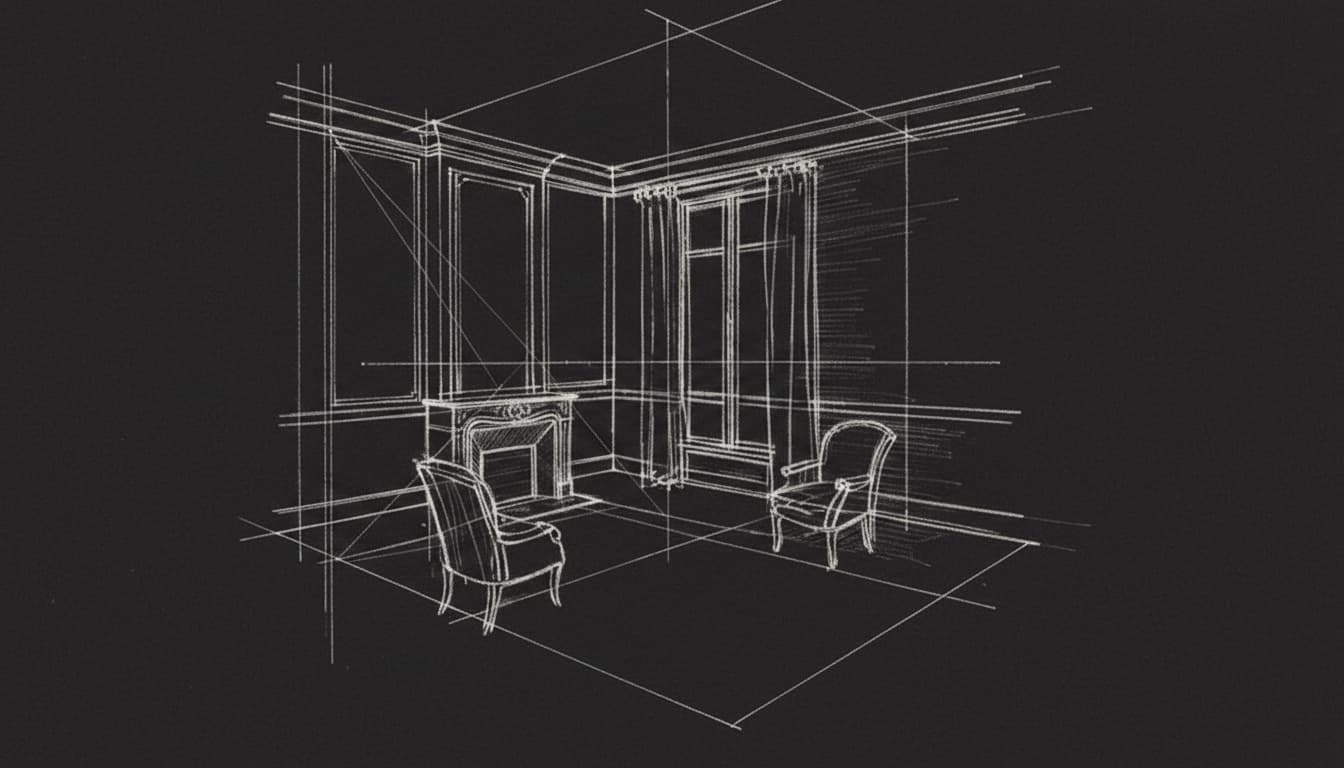
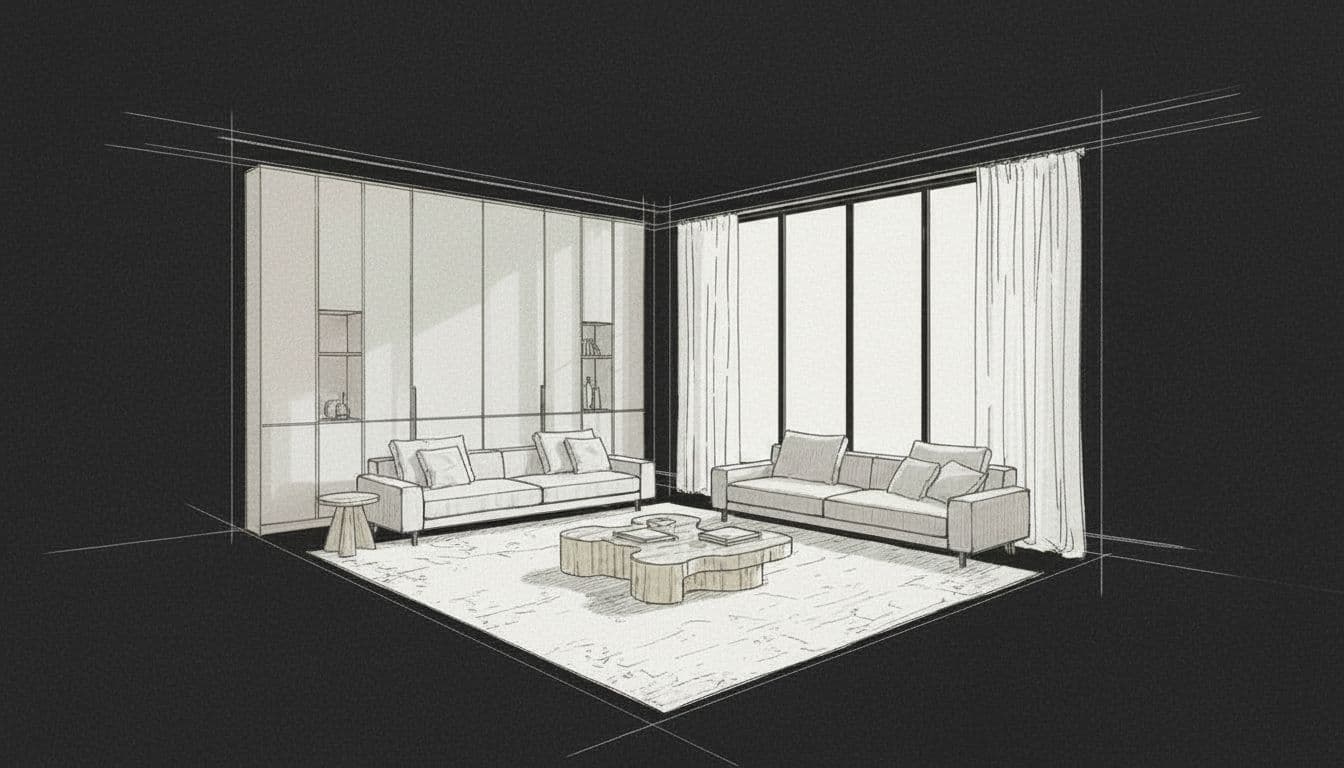
A headboard is difficult to judge from a plan: a width and a height on paper say little about how the panel will actually sit against your wall, your mattress and your light. This is exactly what we draw before anything is made — perspectives faithful to the materials, so you decide on an image rather than a guess. The rest follows our project steps, and it is what we draw for every custom furniture project, whether the room is a full Paris apartment or a single bed wall in a small space. For a single piece like this, glancing at how interior designer fees are usually structured helps set expectations before the first drawing.
FAQ
What size should a custom headboard be?
A little wider than the mattress and as tall as suits the room — there is no fixed rule. What matters is drawing it against your actual bed and your actual ceiling height, so the proportions read as intentional rather than approximate.
Can a headboard include storage or shelving?
Yes. A shelf or a small worktop can be built into the panel on either side of the bed, at exactly the height you want it, so it replaces a separate nightstand rather than sitting next to one.
Is a custom headboard more expensive than a bought one?
Not necessarily. The price depends on the size, the material and how much is built into the panel — lighting, shelving, upholstery — rather than on the fact that it is made to measure.
Who builds the headboard once it is designed?
The right craftsman for the material — a cabinetmaker for an oak panel, an upholsterer for a linen one. If you already work with someone, the file is ready for them; if not, we can look for the right person for you.