A Murphy bed in a studio apartment: the plan around it
A Murphy bed studio apartment plan: the wall of joinery, the floor clearance, and the furniture that shares the space.
A Murphy bed, or fold-away bed, is often the first thing people mention when they picture a studio apartment: fold it up, and the bed disappears. A Murphy bed studio apartment plan starts on paper, with the wall it lives in, the clearance it needs when it drops, and what the room becomes once it is standing upright at seven in the morning — not in a shop, weighing one frame against another.

The bed is a piece of joinery, not a piece of furniture
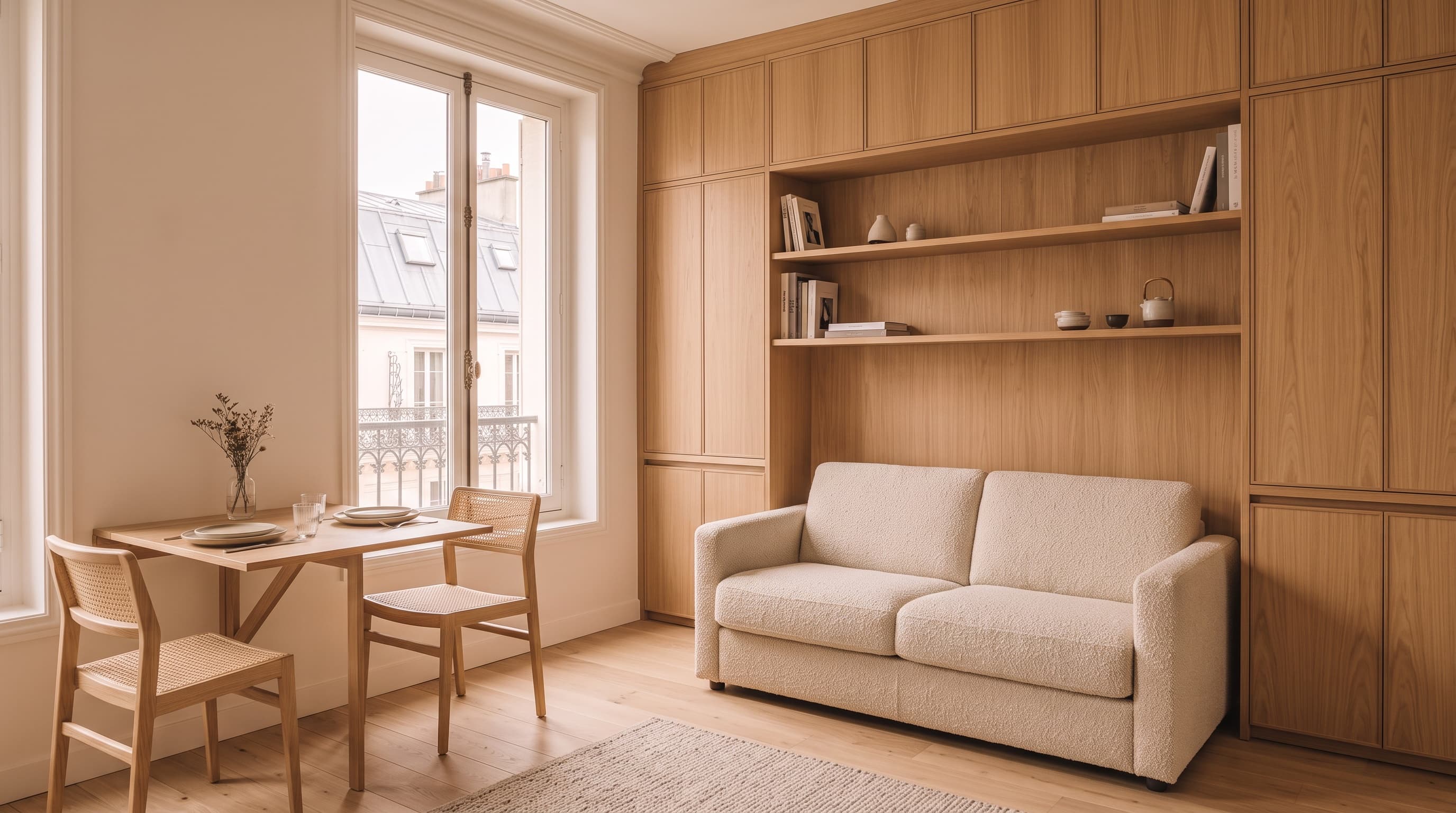
A fold-away bed rarely arrives as a stand-alone object. Most work best built into a wall of joinery that runs the full height and width of the space it occupies, with the bed mechanism concealed behind a panel that matches the cabinetry around it. That wall can also carry a wardrobe on one side, open shelving on the other, and a strip of lighting along the top — so that folded up, it reads as a wall of storage, not as a bed in hiding.
Building the bed into that wall, rather than buying it as a separate cabinet, is also what lets it fit a room exactly. A standard unit is sized for an average alcove that rarely matches yours; a few centimetres of wasted width on either side of an off-the-shelf frame is common in a Paris studio, where walls are rarely perfectly square. Furniture made to measure closes that gap by drawing the cabinet to the millimetre of the actual wall. Seeing how a renovation budget breaks down before ordering the cabinet avoids discovering later that the wall of joinery needed a bigger share than planned.
The clearance in front decides where it can go
Every fold-away bed needs a stretch of clear floor in front of it, long enough for the mattress to swing down and land flat — for a queen-size bed, that is close to two metres. This single measurement decides more about a studio's plan than any other: the bed can only sit on a wall that faces at least that much open floor, which usually rules out the wall opposite a narrow galley kitchen or a tight entrance corridor.
Working out that clearance early, before choosing where anything else goes, avoids a common disappointment: a beautifully built cabinet that cannot actually open because a sofa or a dining table ended up in its path. The plan starts from this one line on the floor, and the rest of the room is drawn around it.
A fold-away bed clears sixteen hours of floor a day — the plan is what fills them well.
What shares the floor when the bed is up
The floor a fold-away bed keeps clear sits empty for roughly sixteen hours a day, which is exactly why it should be the best-used stretch in the room. A sofa placed with its back a little short of the fold line, or a low console and a rug that rolls away easily, keeps that floor doing two jobs. A slim desk on castors, wheeled clear when the bed comes down, can turn the same stretch of floor into a workspace by nine and a bedroom by eleven at night.
The trick is choosing pieces that move without ceremony. Anything heavy, anything with a cord running across the floor, anything that needs two hands to shift becomes a small daily friction that eventually stops happening — and the bed stays folded down instead. Light furniture, or furniture on wheels, is what makes the fold-up habit stick.
What changes at seven in the evening
In a studio built around a fold-away bed, the evening has a genuine hinge point. Before it, the room is a sitting room, a desk, sometimes a dining corner. The cabinet door opens, the bed comes down over whatever cleared the floor, and the same square metres become a bedroom — sheets already made up, since a well-drawn frame keeps the mattress dressed even folded away.
That hinge works best when it needs no more than moving one or two light pieces, not rearranging half the room. A studio where getting into bed takes ten minutes of shifting furniture is a studio where the bed stops folding down most nights, which defeats the entire point of choosing one.
Reading lights and outlets belong in the wall, not the bed
A fold-away bed that is well thought through carries its own reading light, wired into the cabinet above where the pillows sit, and a shelf-width ledge deep enough for a glass of water and a phone. An outlet built into the side of the cabinet means a lamp or a charger never depends on a cable trailing across the floor the bed just cleared. None of this needs to be visible when the bed is folded up — the electrics sit behind the panel, decided once at the drawing stage rather than improvised afterwards with an extension lead.

Drawing the room before choosing the bed
A fold-away bed is a good answer to a real question — how does one room hold both a bedroom and a living room — but it is not the only one, and it is worth weighing against the other ways a studio can be divided before settling on it. What decides whether it is the right fit for your apartment is the wall it would live in, the floor in front of it, and the furniture that would share that space: three things easier to judge on a drawing than by picturing a mattress in mid-air.
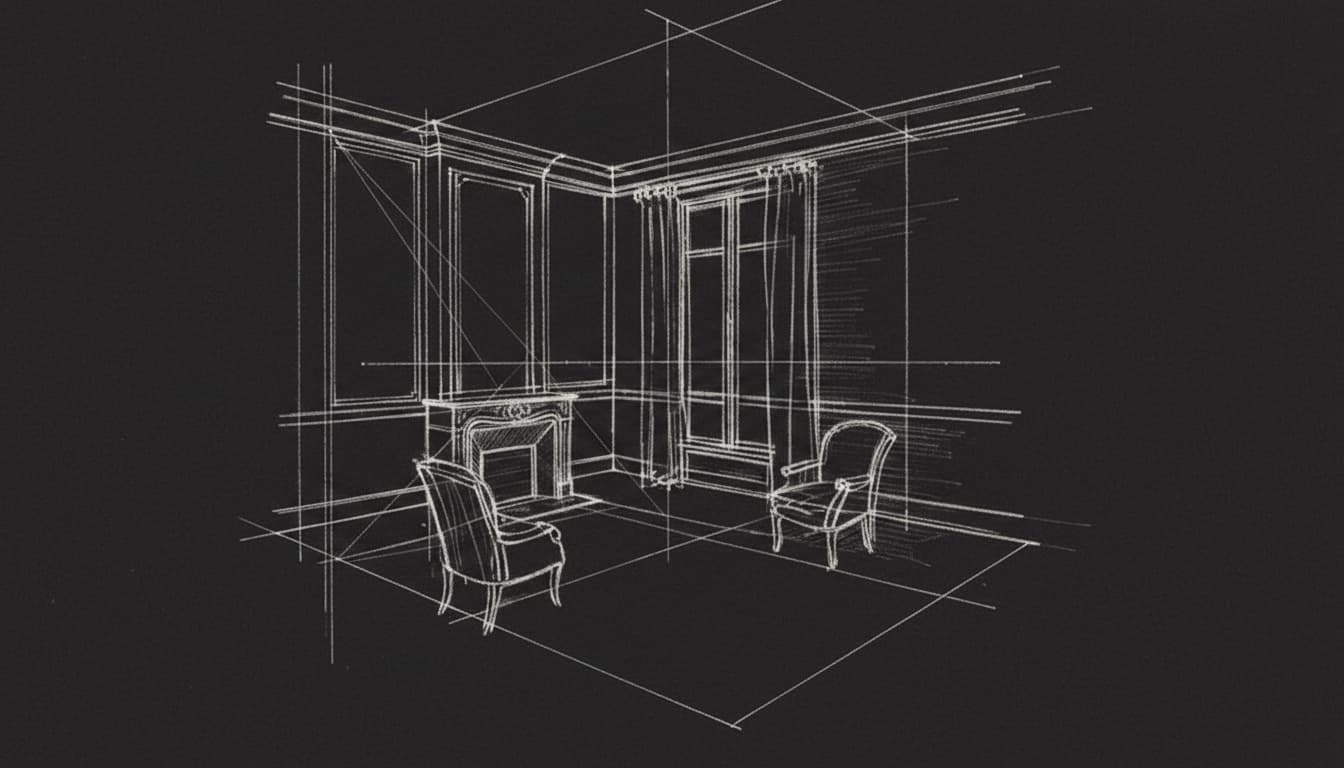
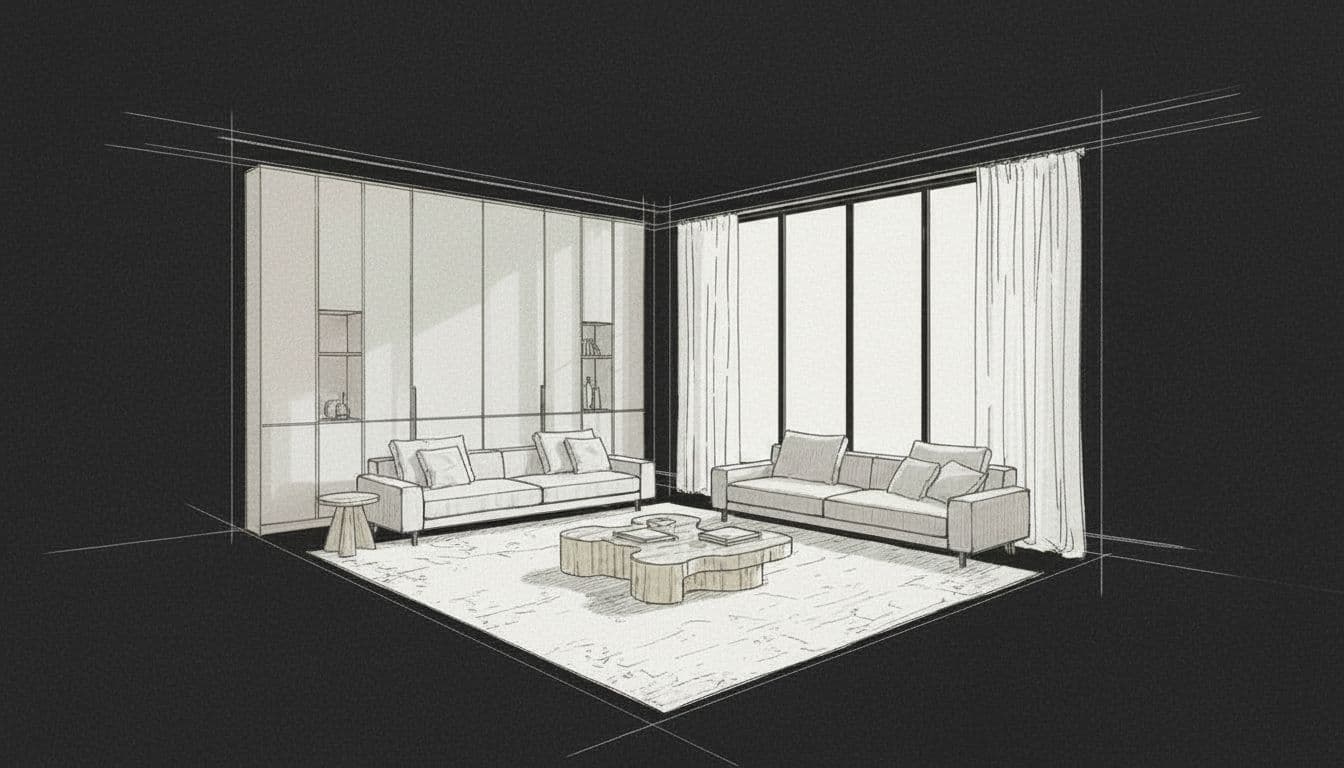
This is what we draw for every custom furniture project built around a fold-away bed: the plan first, then a perspective of the room in both states, folded up and folded down, so you see the sitting room and the bedroom before a single panel is cut. We work with international clients mostly in written English and drawings, which carries a project well even when you are planning it from abroad.
FAQ
How much floor space does a Murphy bed actually need?
Beyond the bed's own footprint, plan for the clearance it needs to fold down — close to two metres for a queen-size frame, measured from the wall it is built into. That stretch has to stay genuinely clear, which is the main reason the wall it goes on is chosen before anything else in the room.
Can a fold-away bed be built into existing joinery, like a wardrobe wall?
Yes, and it is usually the better outcome. Drawing the bed cabinet as one continuous wall with a wardrobe or open shelving, rather than adding a separate boxy unit, keeps the room reading as a single piece of furniture instead of a bed with cupboards bolted on either side.
Does a Murphy bed work with a real mattress, or only a thin one?
A well-built frame holds a proper mattress, generally up to about eighteen to twenty centimetres thick, held in place with straps so it does not shift when the bed is folded up. The comfort trade-off is smaller than people expect; what matters more is the frame being drawn for the exact mattress chosen, rather than adjusted to fit one bought afterwards.
Is a fold-away bed a good idea for a studio I plan to rent out?
Often, yes. It shows a viewing as a full sitting room rather than a room dominated by a bed, which tends to read larger and more finished in photographs and in person. The joinery is durable enough to handle daily folding across a succession of tenants when it is drawn and built properly from the start.