Interior designer vs decorator: which do you need?
Interior designer vs decorator: the real difference is whether your apartment's plan needs to change, or just its finishes.
"Interior designer" and "decorator" get used almost interchangeably in conversation, yet the two are hired for different reasons and deliver different results. If you are standing in a Paris apartment trying to decide between an interior designer and a decorator, the honest test is not about taste or budget. It is about whether the walls themselves need to move. Here is where the two overlap, where they diverge, and how to tell which one your apartment is asking for.

Two different questions, one apartment
The question a decorator answers is: how should this room feel? Given the walls as they stand, which colours, fabrics, lighting and furniture make a space calm, warm or bright, and which of those suit you. The question an interior designer answers comes earlier: should these walls be where they are at all? Where a partition splits a room that would rather be one, where a corridor swallows light that should reach the living room, where storage should live inside a wall instead of piled on top of it. Neither question outranks the other. They simply arrive at different moments, and not every apartment needs both.
Two people can walk through the same apartment and reach different conclusions about which question is theirs. Someone who has lived there for years and simply wants it to look like 2026 rather than 2010 is asking the decorator's question. Someone who bought last month and keeps bumping into the same doorway, or who has given up trying to fit a real desk anywhere, is already asking the designer's.
What a decorator changes
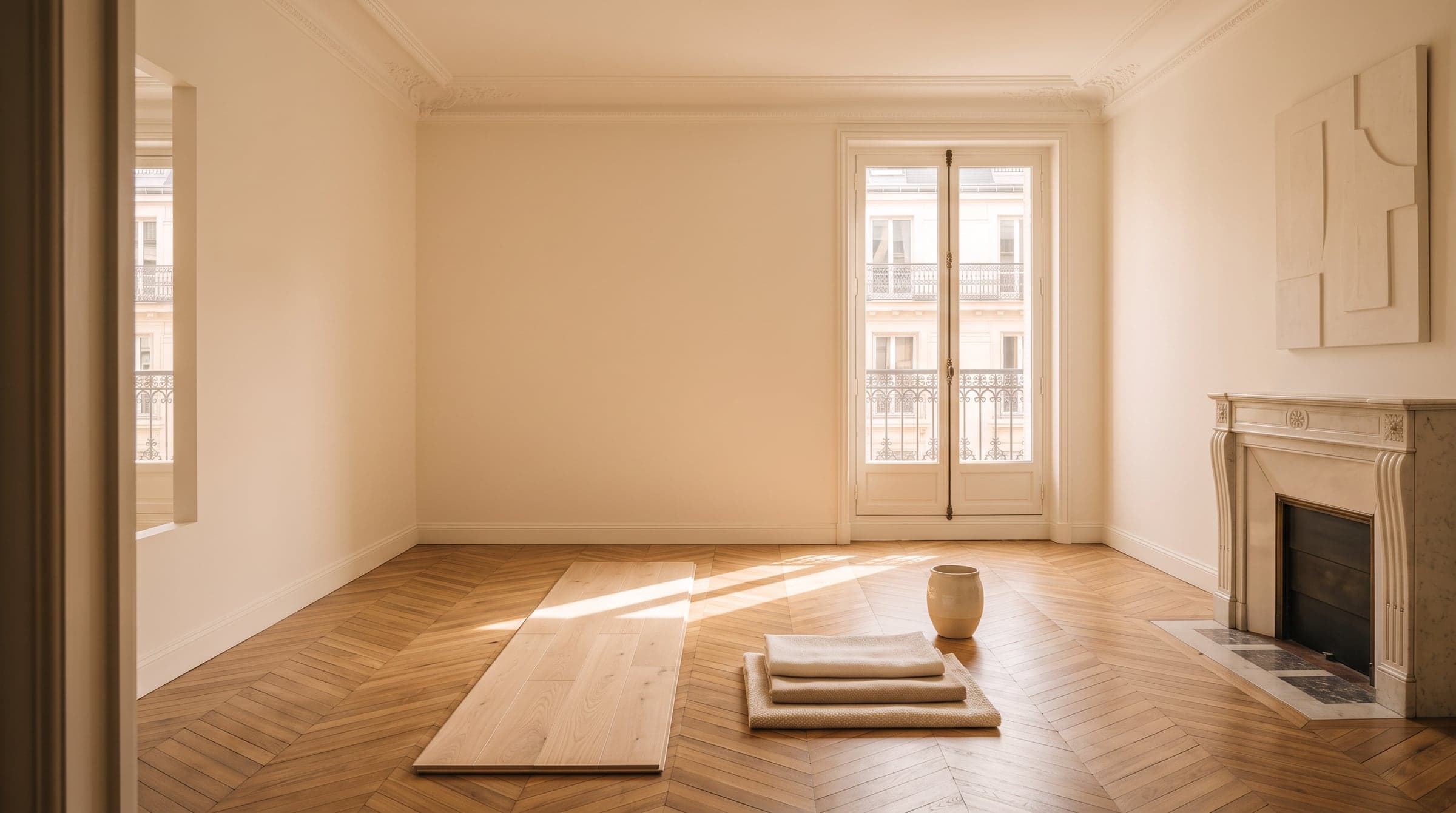
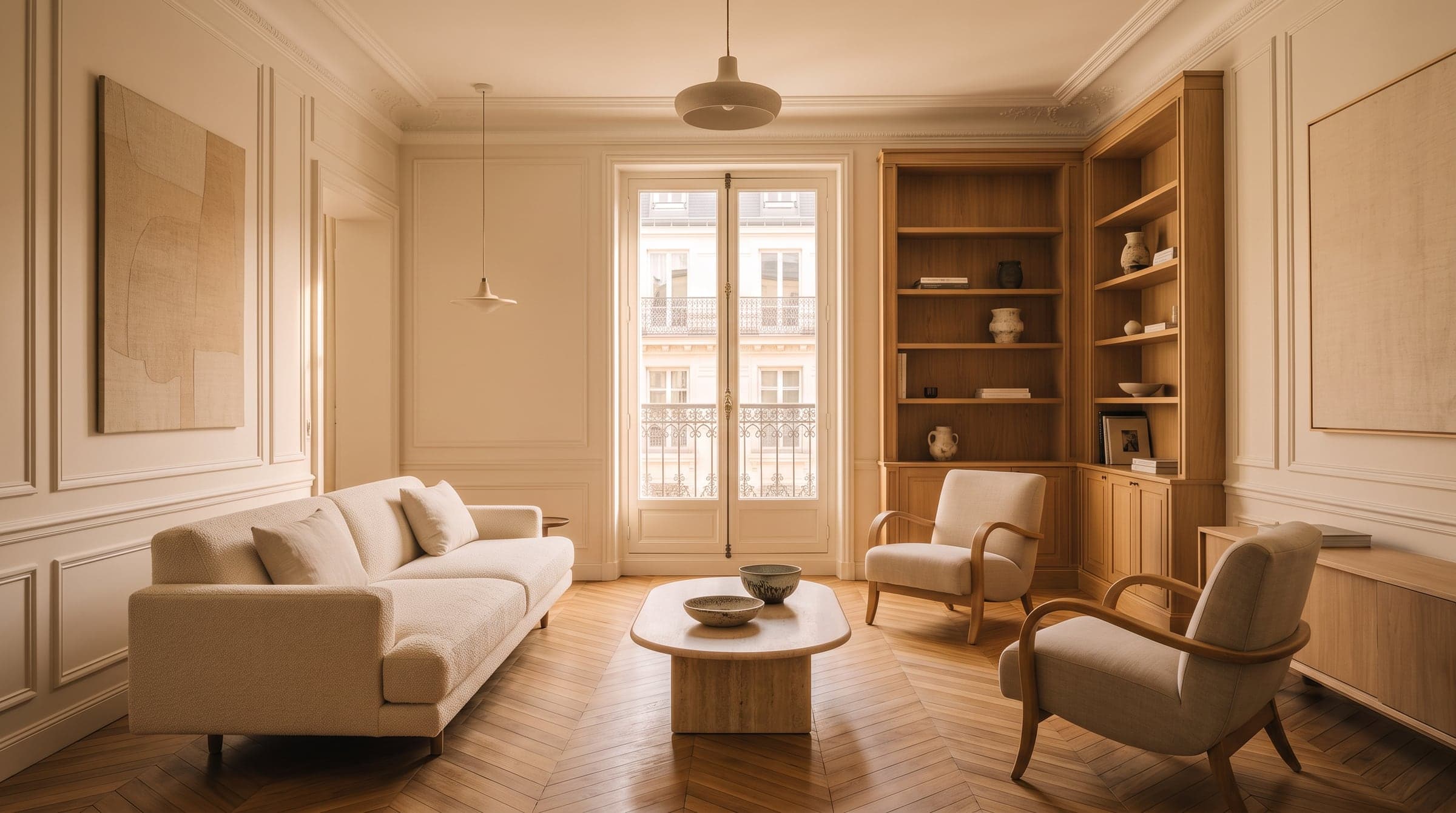
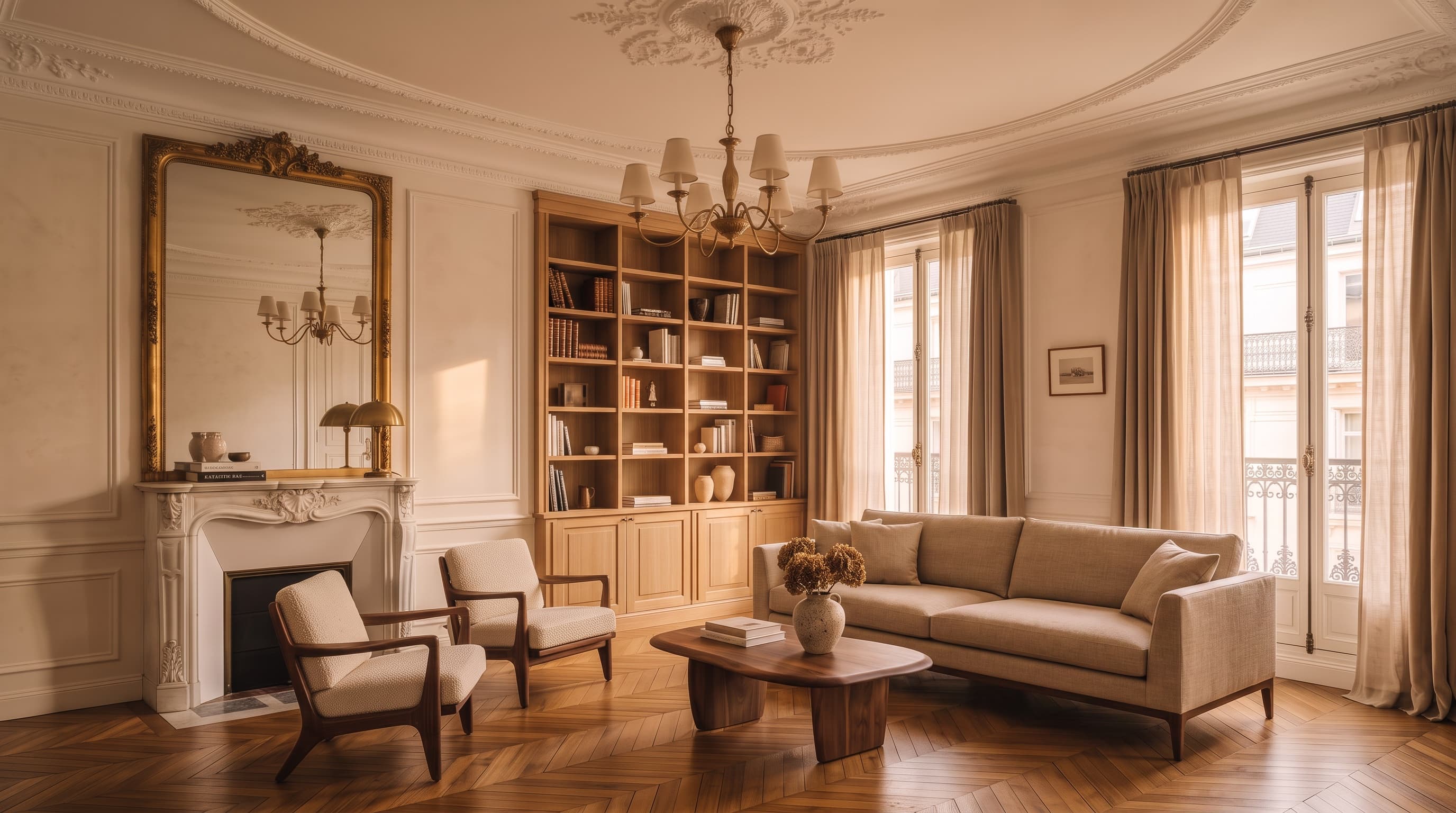
A decorator works with the space you already have. Their skill is colour and light, the choice of textiles, fixtures and furniture that suit a room and suit you, the composing of an atmosphere out of what already exists. If a Paris apartment already has a plan that works, the kitchen in the right place, the bedroom quiet, the living room getting the light it needs, a decorator can carry you a long way toward a home you love, often faster and on a smaller scale than a renovation. That is honest, skilled work, and plenty of apartments need exactly that and nothing more.
The test is not taste or budget: it is whether the walls themselves need to move.
What an interior designer changes
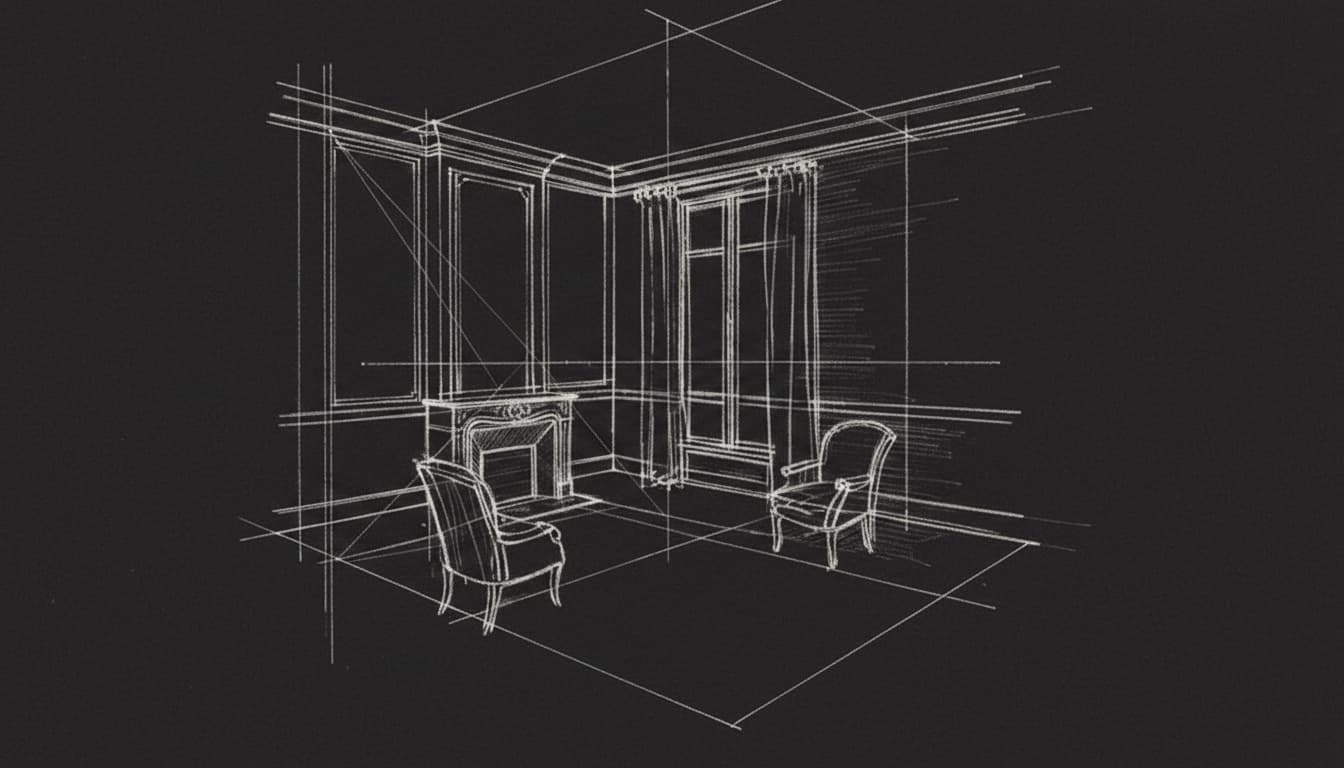
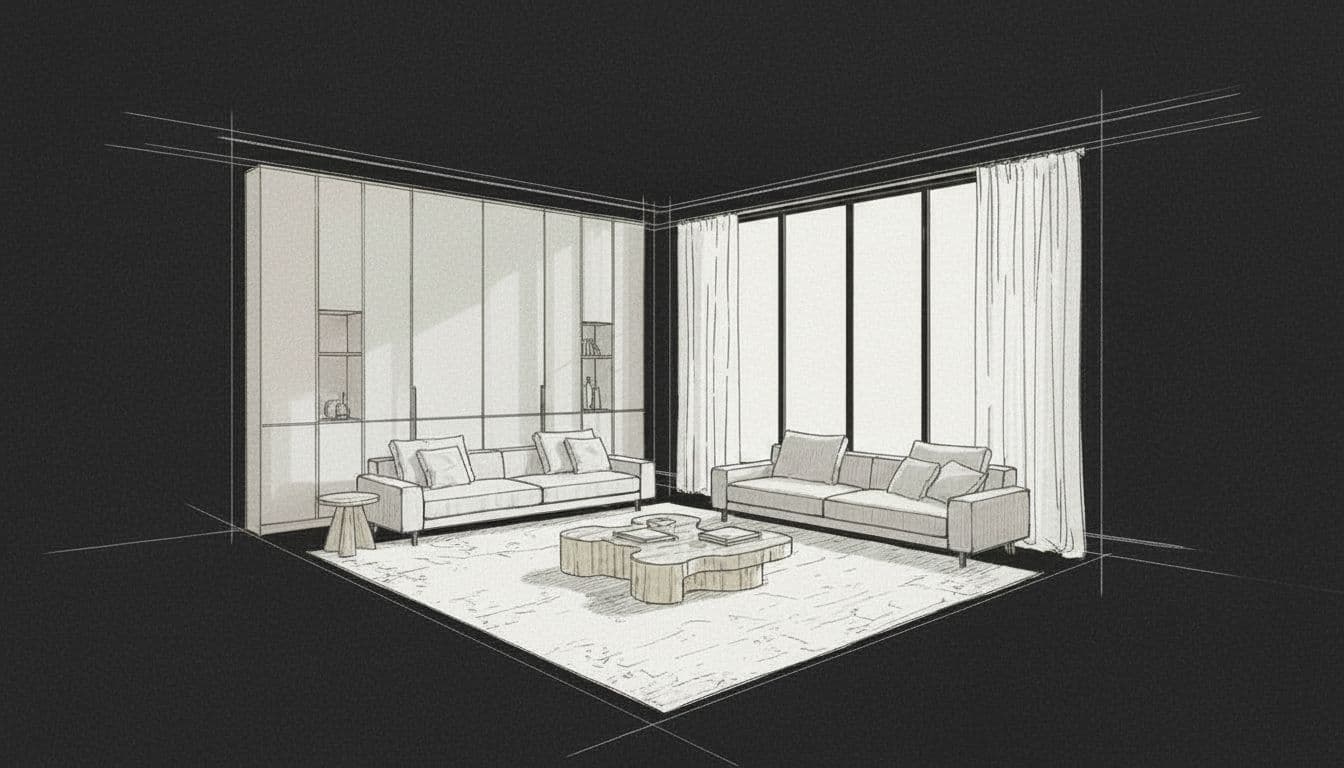
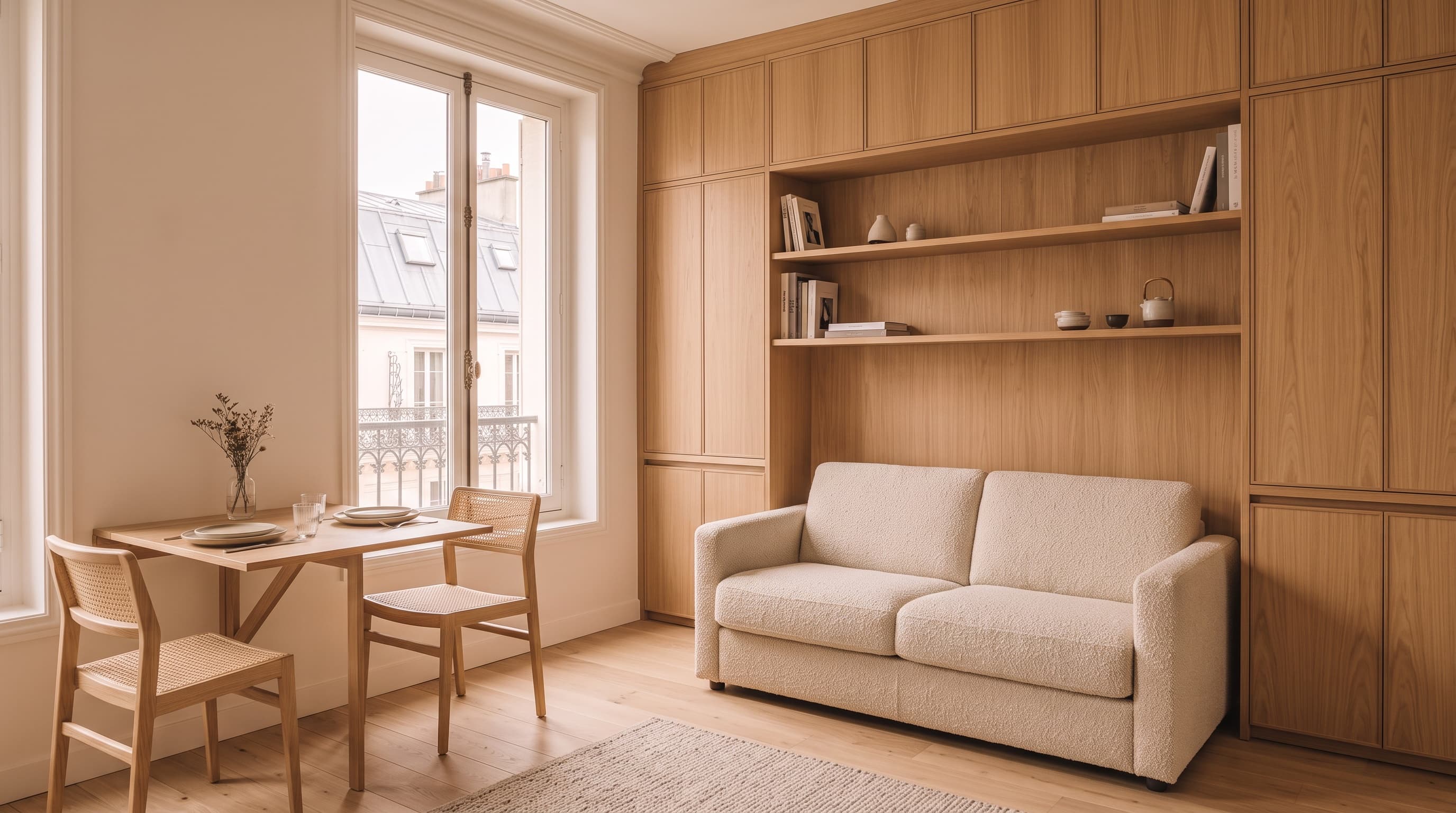
An interior designer starts one step earlier, at the plan itself. If a kitchen sits far from where a family actually gathers, if storage has nowhere to go because the layout never accounted for it, rearranging furniture will not fix it. This is where partitions get redrawn and a home's proportions get rebalanced enough to solve a problem finishes never could. Two versions of a layout can even be compared as images before anything is decided, which is difficult to do with a plan alone. Because a designer starts from the shell of the room, storage tends to get drawn directly into it, rather than added afterwards as a piece of furniture. What does an interior designer do on a project like that, step by step, is worth reading in full.
Where custom furniture sits
Furniture is where the two roles blur most, and it is worth being precise about it. A decorator chooses furniture, sourcing pieces that fit a room as it stands. An interior designer draws furniture: a bookcase built into an alcove that is not quite square, a headboard sized to a room's true proportions, a piece designed to the millimetre for a wall and a light that exist nowhere else. Both can result in furniture you love. Only one of the two starts from the architecture rather than from a catalogue.
A dining table is a useful example of the difference in practice. A decorator might source one that fits the room and suits the style you want. An interior designer, drawing the room from scratch, can size that same table to the exact width the space allows, then draw the storage around it so nothing else in the room has to compromise for its sake.
Three apartments, three answers
Picture three cases side by side. A newly bought one-bedroom whose galley kitchen wastes half a metre of usable width needs an interior designer before anything else, since the fix is architectural, not aesthetic. A well laid-out apartment whose owner has simply grown tired of a palette chosen ten years ago needs a decorator, and nothing more drastic. And a Haussmann apartment with beautiful proportions but no built-in storage anywhere sits in between: the plan barely needs to move, but the furniture still has to be drawn specifically for it.

Deciding before you hire anyone
The simplest test is to walk through the apartment, room by room, and ask whether the discomfort is about where things are or about how they look. If the answer keeps coming back to where, the kitchen's position, a blocked corridor, nowhere to put things away, that is a plan problem, and a plan problem calls for an interior designer. If the answer is mostly about how a room looks and feels, a decorator is very likely the lighter, and right, choice. Either way, a first conversation about the steps of a project usually settles which one you are facing within minutes, without either side needing to guess.
FAQ
Can a decorator take on a project that also changes the layout?
Not effectively on their own. Moving a partition, relocating plumbing, or drawing storage into a wall calls for someone who works from measured plans before anything is built. A decorator's eye for colour and atmosphere still matters once that plan exists, whether brought in by you afterwards or handled as a later step of the same project.
Are the two priced on the same basis?
Rarely. Choosing paint, textiles and furniture for a room that already works is a smaller job than redrawing an apartment's layout, and the two are usually quoted differently because one changes finishes and the other changes the plan itself. A fixed fee, agreed before starting, is the clearest way to compare either against your own budget. Our page on interior designer fees sets out how that fixed fee is usually framed.
Can one project use both a decorator and an interior designer?
Yes, and it often happens in that order: the layout gets settled first, since it constrains everything that follows, then the finishing choices come after. Some interior designers, including us, also draw the furniture and finishes directly into the same plan, so the two steps merge into one.
Does moving a single partition still count as design rather than decorating?
Yes. The size of the change does not decide the category; what changes does. A single partition moving, a doorway shifting, storage carved into a wall that had none: all of it touches the plan, which puts it in an interior designer's territory even when the rest of the apartment stays untouched.