Built-in desk ideas for homes that work harder
Built-in desk ideas for a home that is also a living room: light, height, hidden cables, and closing work away.
A desk in a living space has to earn its place twice: once during the working day, and once in the evening, when nobody wants to look at a laptop and a stack of papers over dinner. Built-in desk ideas that work well in a real home start from that second requirement as much as the first. The desk still needs good light and the right height, but it also needs a way to stop being a desk when the day is over.

Where the light falls decides where the desk goes
A desk facing straight into a window looks appealing on a floor plan and is uncomfortable within a week: the eye adjusts constantly between a bright window and a dim screen, and a laptop lid becomes a mirror by mid-morning. Light from the side, falling across the desktop rather than into your eyes or your screen, is the position that actually gets used every day. In a Paris flat with one good window per room, that often means the desk runs along the wall beside the window rather than beneath it.
The height and depth a laptop actually needs
A desk built to a standard 72 to 75 cm suits someone using a separate keyboard and a raised monitor. It suits almost nobody working straight off a laptop, where the same height puts the screen too low and the wrists at an angle that aches by the afternoon. A built-in desk can be drawn to your own height and your own equipment, whether that means a slightly lower worktop, a shallow shelf above for a raised laptop stand, or simply enough depth, around 60 cm, to keep a monitor at a comfortable distance rather than pressed against the wall.
A desk that closes at the end of the day stops being a fixture and becomes furniture.
Cables that vanish into the joinery
A desk collects a charger, a monitor cable, a desk lamp and usually a printer, and left alone they end up in a visible tangle behind the chair. A small channel cut into the back edge of the desktop, and a socket built into a side panel rather than a trailing extension lead, keep all of it below the worktop and out of sight. The same discipline that hides a router behind a bookcase door works just as well behind a desk.
A desk that closes when the workday ends
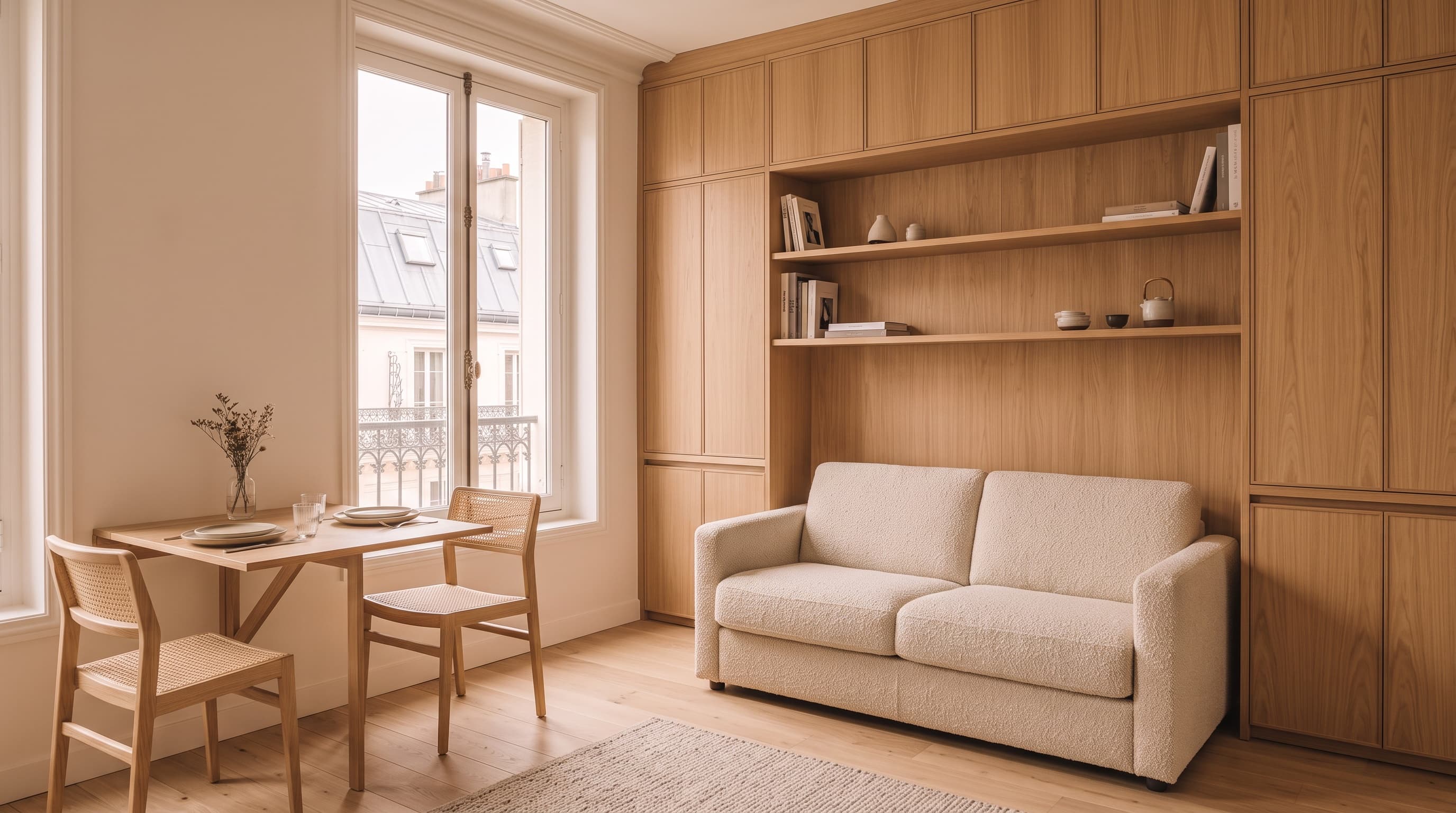
This is the idea that changes a desk from a fixture to a piece of furniture that behaves. A hinged desktop that folds flat against the wall, or a pair of sliding doors that close over the whole recess, takes the desk out of the room's evening life without moving a single object off it. Imagine a one-bedroom flat where the only free wall sits in the corner of the living room: closed, that wall shows two doors matching the rest of the joinery; opened, it is a full desk, screen and papers exactly where they were left.
An alcove or a window bay, put to work
Space that would otherwise sit empty is often the best place for a desk precisely because nothing else wants it. An alcove beside a chimney breast, too narrow for a sofa and too specific in its dimensions for shop-bought furniture, can carry a desk cut to its exact width with shelving above for files and books. A shallow window bay does the same job with better light, at the cost of a few centimetres of depth that the drawing has to account for from the start.
A landing or the end of a corridor works too, for a household where the desk needs to be near the rest of the flat without sitting inside any one room. The trade-off is one most people accept happily once they see it drawn: less privacy during a call, in exchange for a room that stays entirely free of work at every other hour of the day.
Storage that keeps papers from spreading into the room
A desk without enough storage beside it spreads: a folder here, a charger there, a stack of post on the nearest surface. A drawer at the right height for a keyboard, and a shelf or two above sized for box files rather than books, gives every object a place close enough to the desk that it never migrates onto the dining table. This is custom furniture in its most ordinary, useful form: not a statement piece, just a desk that holds what a working day actually needs.
A shallow top drawer suits what gets picked up and put down all day — a notebook, a charger, headphones — while a deeper one below can take box files without forcing the desk itself any wider than it needs to be. Splitting storage this way, by how often something is used rather than by what it is, tends to matter more to daily comfort than the total number of drawers.

Drawn for the room it has to share
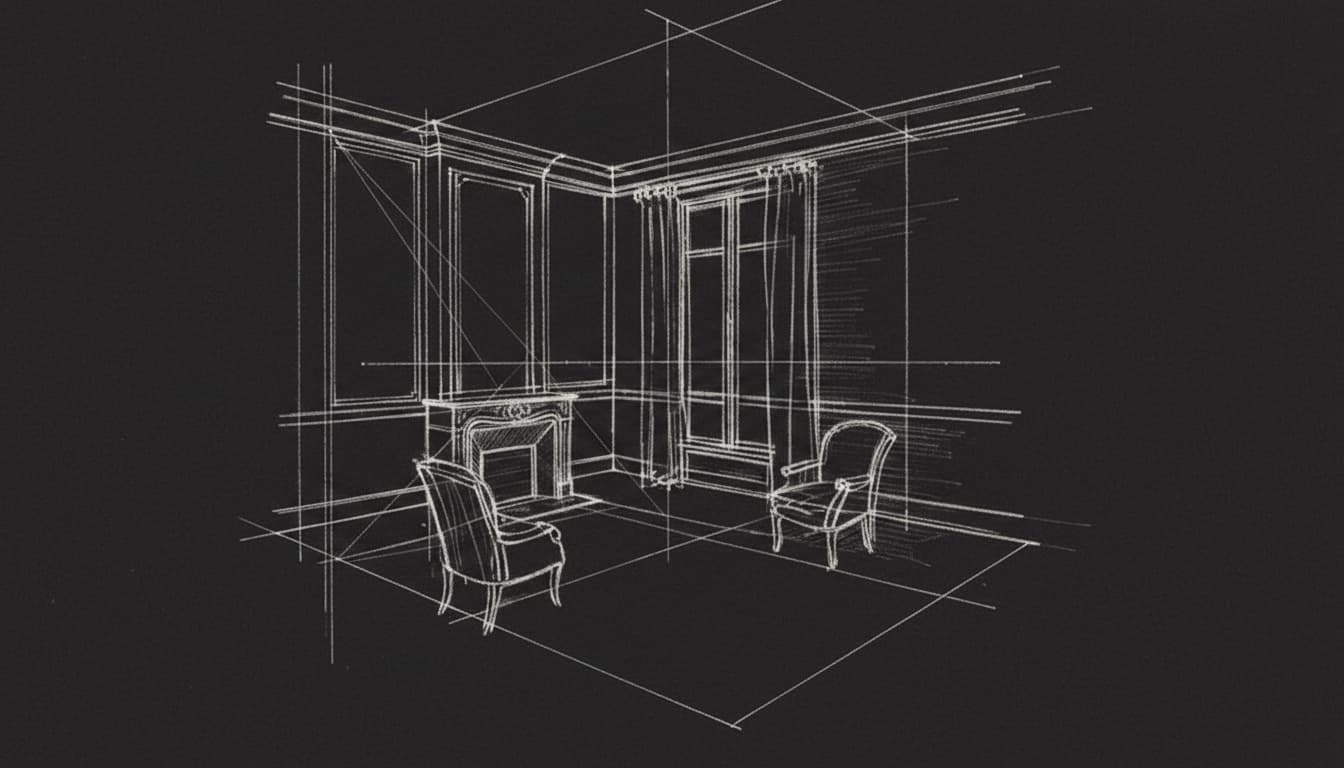
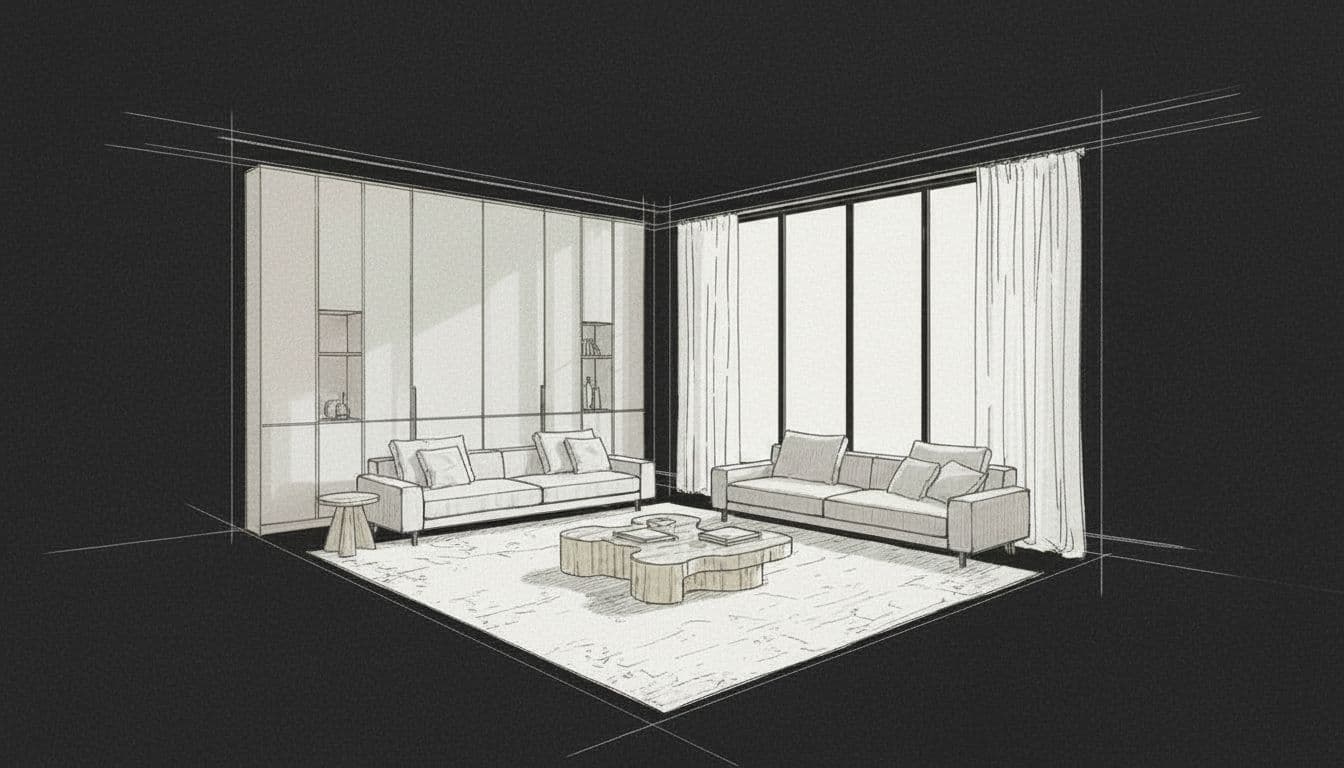
Most of the people asking about a home desk are working from a flat that also has to be a living room, a bedroom, or both — which is exactly the constraint we draw around in a small space, and just as often for someone commissioning from abroad, before a move to Paris or between visits. You see the desk drawn into the room, doors open and closed, before anything is built: that is what the perspectives show at the design stage. The sequence from there follows the same project steps as any other piece of furniture we draw. If the desk is part of a larger project, how design fees are typically structured is worth a glance beforehand.
FAQ
What is a comfortable height for a built-in desk?
It depends on what sits on it. A desk used with a separate keyboard and a raised monitor suits the standard 72 to 75 cm; a desk used straight off a laptop is often more comfortable a little lower, with a raised stand or shelf bringing the screen back up to eye level.
How do you stop a home desk from taking over a living room?
Usually by giving it a way to close. A folding desktop, a sliding door, or a cabinet front that matches the rest of the joinery lets the desk disappear from view at the end of the day, rather than sitting out as a visible reminder of work in a room meant for the evening.
Can a built-in desk fit an odd-shaped alcove or window bay?
Yes, and it is one of the better uses for that kind of space. An alcove or a bay is usually too specific in its width and depth for shop-bought furniture, which is exactly the situation a piece drawn to measure is built to solve.
Who builds the desk once it is drawn?
Once the drawing is finished, down to the last dimension, the piece is built by craftsmen working in solid wood and veneer. You receive a complete file first, with every measurement, so nothing is left to interpretation between the drawing and the workshop.