Warm minimalism interior design in a Paris apartment
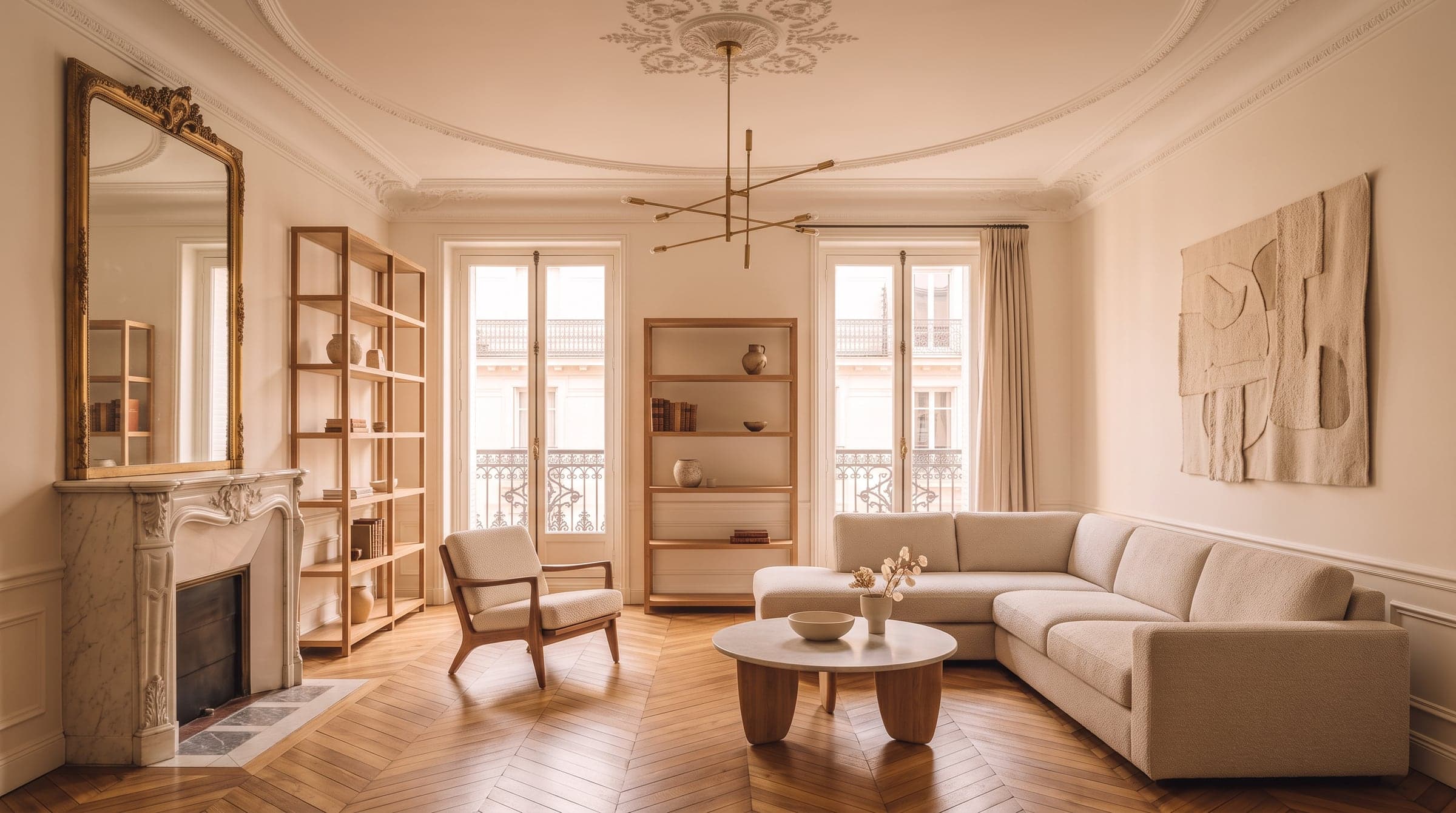
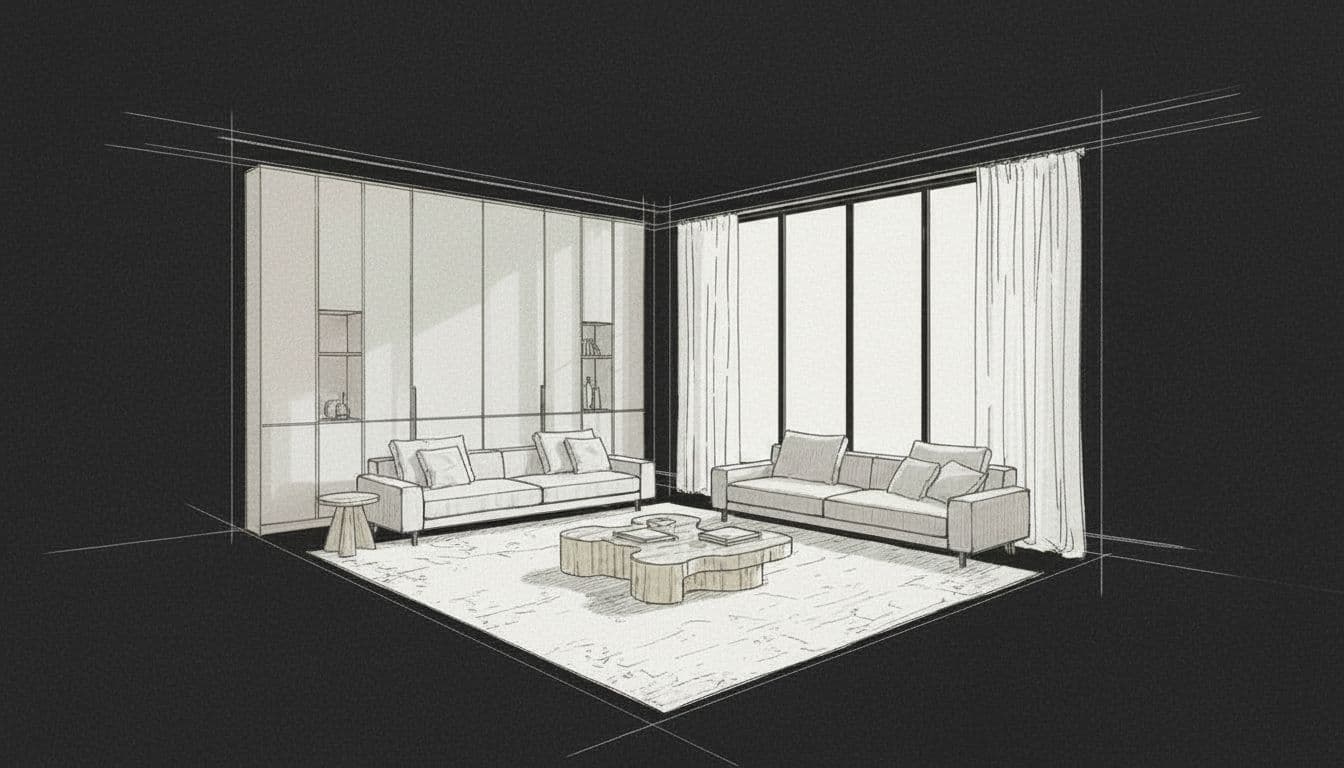
Warm minimalism interior design in a Haussmann apartment: the few materials, proportions and mouldings kept in place.
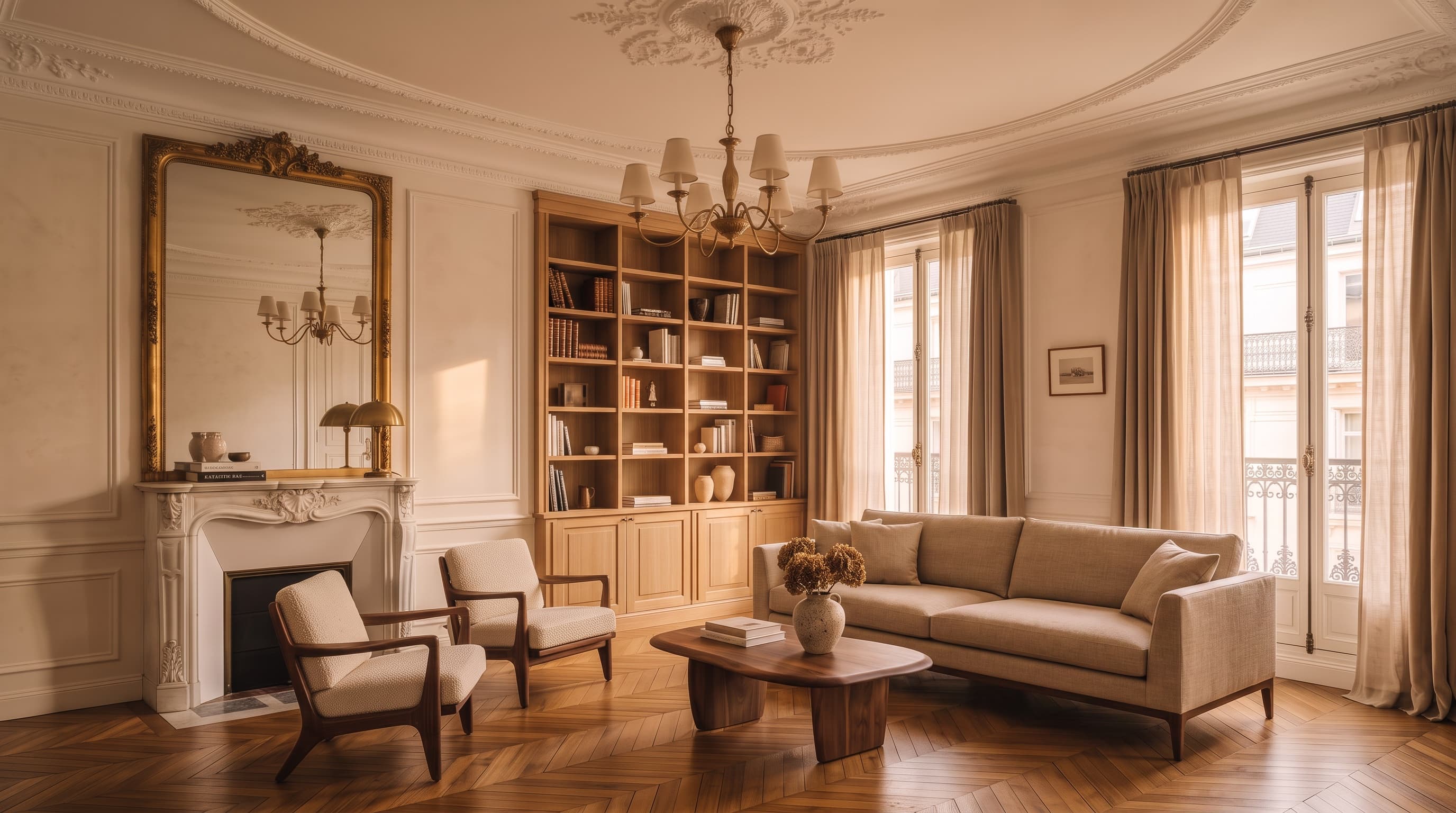
Warm minimalism interior design describes a room built from few materials and calm proportions, warm rather than cold, quiet rather than empty — the opposite of the stark, sterile minimalism many people picture. In a Haussmann apartment, it takes on a very specific shape, because the room already carries half the discipline of Parisian apartment style: ceilings that often clear three metres, mouldings, a herringbone floor. Warm minimalism here is not about stripping any of that away, but about choosing, once, the handful of materials that will carry the room, then leaving everything else alone.

What warm minimalism actually means
Strip away the mood-board language and warm minimalism comes down to three decisions: few materials, repeated on purpose; proportion left visible instead of covered in decoration; and daylight allowed to do most of the work. It is not the absence of furniture, and it is not a beige room with nothing in it. A warm-minimalist living room can hold a sofa, a bookcase and a dining table and still read as calm, because every piece answers the same short list of materials and sits at a considered distance from the next. What tips a room from cold to warm is rarely the paint colour on its own; it is the wood, the weave and the light working together, so the eye never lands on a single hard surface.
Few materials, chosen once
The palette that keeps a room warm rather than cold usually holds to about four materials: oak for the floor and the joinery, a warm white or cream for the walls, a woven textile such as bouclé or linen for upholstery, and one stone or plaster surface for a worktop, a fireplace surround or a bathroom. Four is not a rule carved in stone, but it sits close to the upper limit: a fifth material, added because it looked good in a shop, is usually the one a room regrets a year later.
Consistency matters more than any single choice, and it also keeps a renovation easier to plan: each material is decided once rather than swapped mid-project, which is most of what keeps a renovation budget predictable. The same oak tone on the floor and on a bookcase reads as one decision; two different oaks in the same room read as an accident.
Warm minimalism is a discipline of proportion and material, not an instruction to remove everything.
The mouldings stay
Nothing in warm minimalism asks for the cornices, the ceiling roses or the marble fireplace to go. Quite the opposite: a Haussmann apartment already carries its own ornament, built by craftsmen at the end of the 19th century, and a calm palette of oak and cream is exactly what lets that ornament read clearly again, instead of competing with a busy wallpaper or a second pattern. This is the material language we bring to every Haussmann apartment renovation: keep what already has value, then draw the rest of the room around it. A ceiling rose or a marble mantelpiece is not decoration to be matched or hidden; it already is the room's one ornament, and a calm palette simply gives it room to be seen.
Storage disappears into the walls
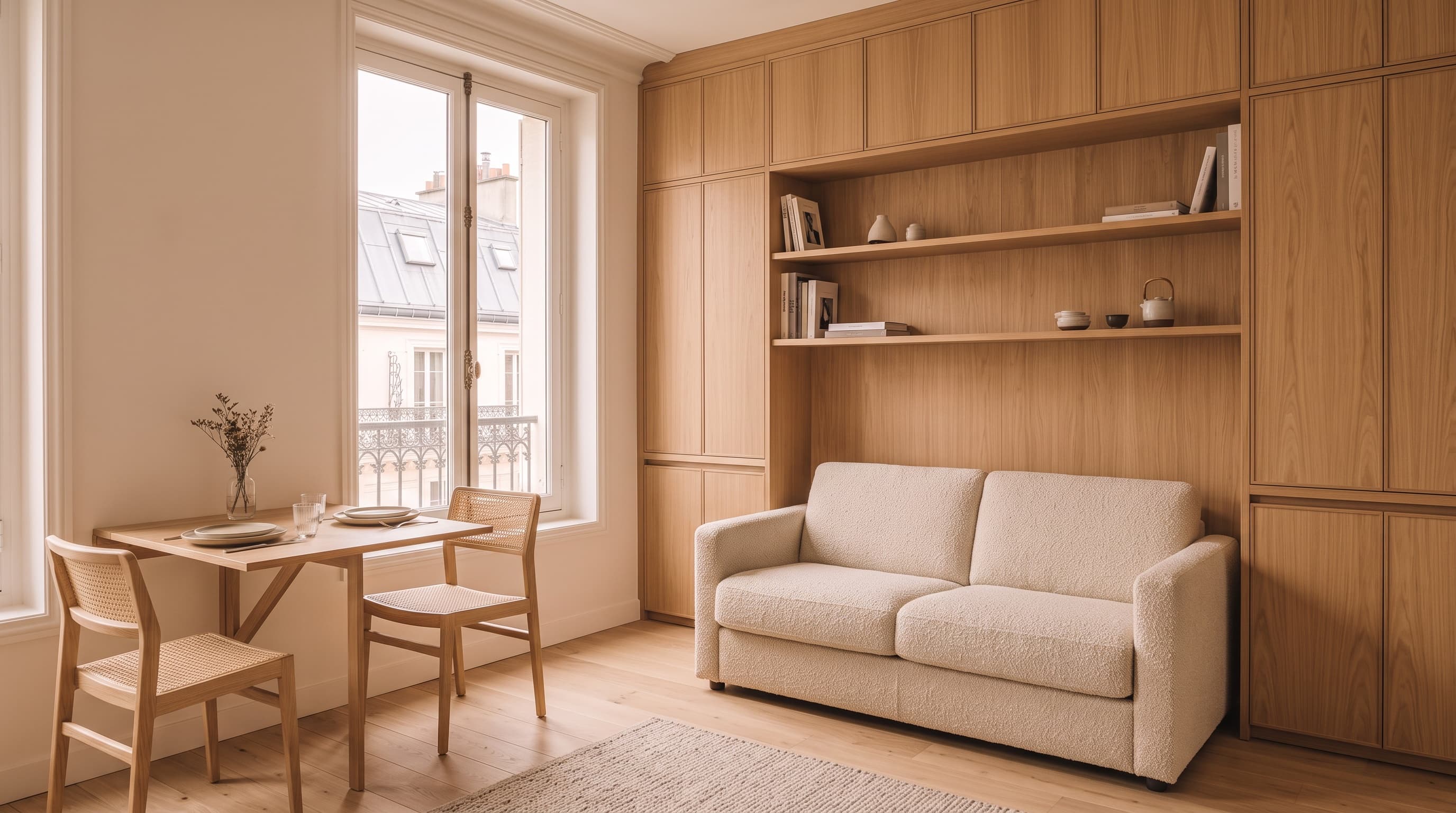
A cluttered room is the fastest way to lose the effect, and clutter is rarely about owning too many things — it is about having nowhere calm to put them. Warm minimalism leans hard on furniture designed to measure: a bookcase built into an alcove, a wardrobe following a sloped ceiling, a low cabinet running the length of a wall at windowsill height. Drawn for the room rather than bought off a shelf, this kind of joinery holds far more than it appears to, which is exactly what keeps the surfaces around it empty. A kettle, a stack of post, a coat: each has a place built for it, so none of them ever needs to sit out on a worktop or a console table.
Proportion before objects
Before a single object is chosen, warm minimalism asks a plainer question: does the room read clearly from the doorway? A tall, narrow bookcase beside a low sideboard fights for attention; the same two pieces, matched in height or deliberately staggered by a considered margin, read as one composition. This is a question for the floor plan and the furniture drawn for it, not for styling added afterwards, which is why it belongs at the start of a project rather than at the end.
Light decides the palette
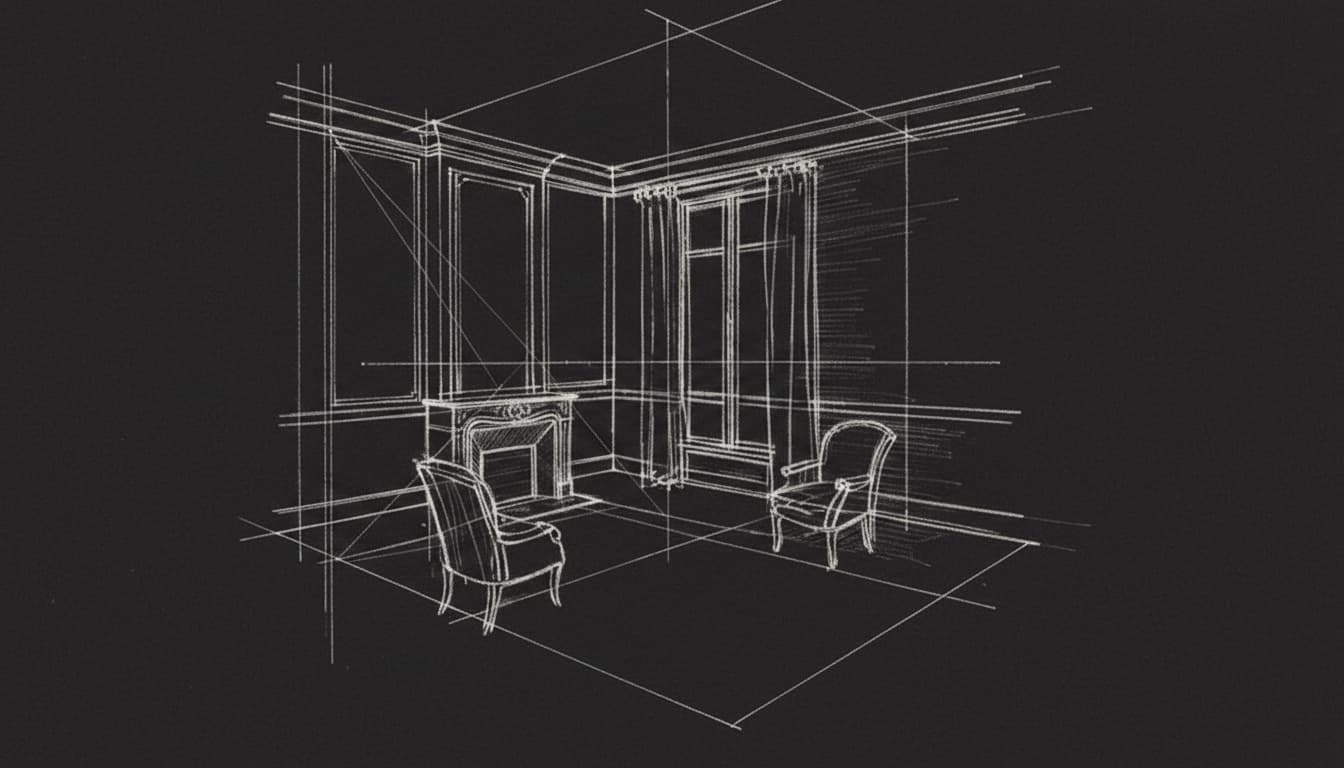
A room facing north keeps a cooler, greyer light through the day, and a warm-minimalist palette leans further into oak and cream to compensate; a room facing south or west can afford a slightly cooler white on the walls without ever feeling cold. This is also why we draw a room in perspective before a single wall is painted, in the apartment's own light rather than a showroom's: the same cream reads differently at nine in the morning and at six in the evening, and a Paris apartment, often lit from one side only, lives with both.

Where the trend stops
The clichés start once every surface repeats the same greige, every texture disappears, and the room stops holding any contrast at all — at that point it reads as bare rather than calm. A genuinely warm room keeps at least one texture that catches the light differently from the rest, whether that is a woven rug, a linen curtain or the grain of the oak itself. Warm minimalism is a discipline of proportion and material, not an instruction to remove everything a room could hold. A room can keep its books, its lamps and a rug it loves, and still belong to this discipline, as long as the underlying list of materials stays short and repeats on purpose.
FAQ
What is warm minimalism in interior design?
It is a way of furnishing a room around a short, repeated list of materials — typically oak, a warm white or cream, and a soft woven textile — so the room reads as calm rather than empty. Unlike a colder, more clinical minimalism, it keeps texture and a sense of warmth: the discipline sits in the proportions and the materials, not in owning fewer things.
Does warm minimalism work with Haussmann mouldings and parquet?
Yes, and the two support each other well. A calm, limited palette lets existing ornament, such as a ceiling moulding or a marble fireplace, read clearly instead of competing with pattern or clutter, and nothing about the style asks for period features to be removed.
How many materials should a warm-minimalist room actually have?
Most rooms that read as calm hold to around four: a wood tone, a wall colour, one textile family and one stone or plaster surface. It is less a fixed number than a discipline: each new material should replace one already in the room, not simply add to the list.
Can warm minimalism suit a small Paris apartment?
It often suits small rooms particularly well, because a limited palette and joinery designed for the room avoid the visual noise that makes a small space feel smaller still. The same discipline that calms a large Haussmann living room does real work in a one-bedroom flat.