How a renovation budget breaks down, line by line
A renovation budget is not one block. It splits into very unequal parts — some you expect, others you discover along the way. Knowing which ones really weigh is already taking back control of your project.
Here is how a budget is actually made up, what weighs most, what almost everyone forgets — and what you can act on.
The lines of a budget
Whatever the project, a renovation budget falls into four families. Their weight varies enormously from one apartment to the next, but they are always there.
- The works
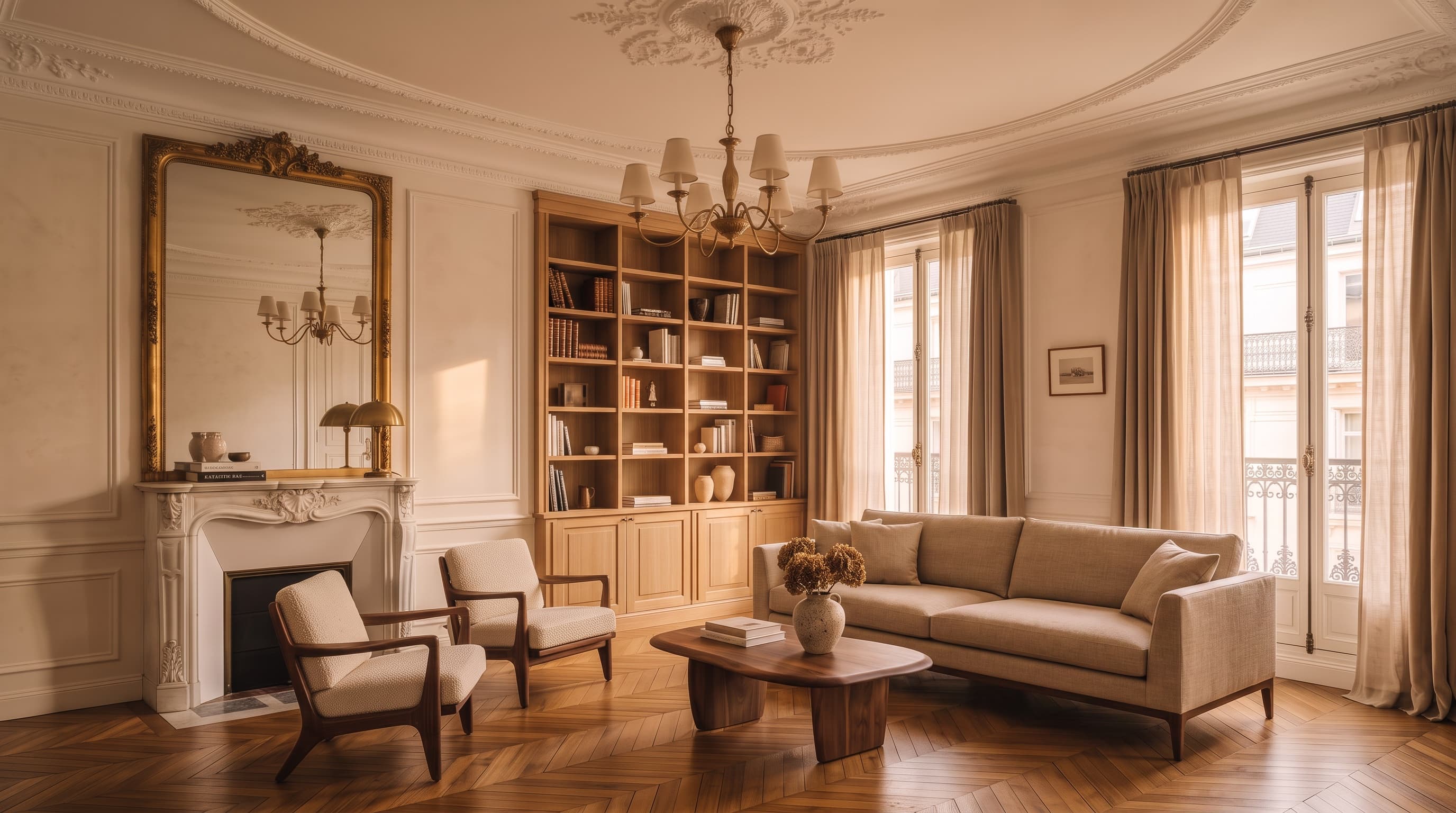
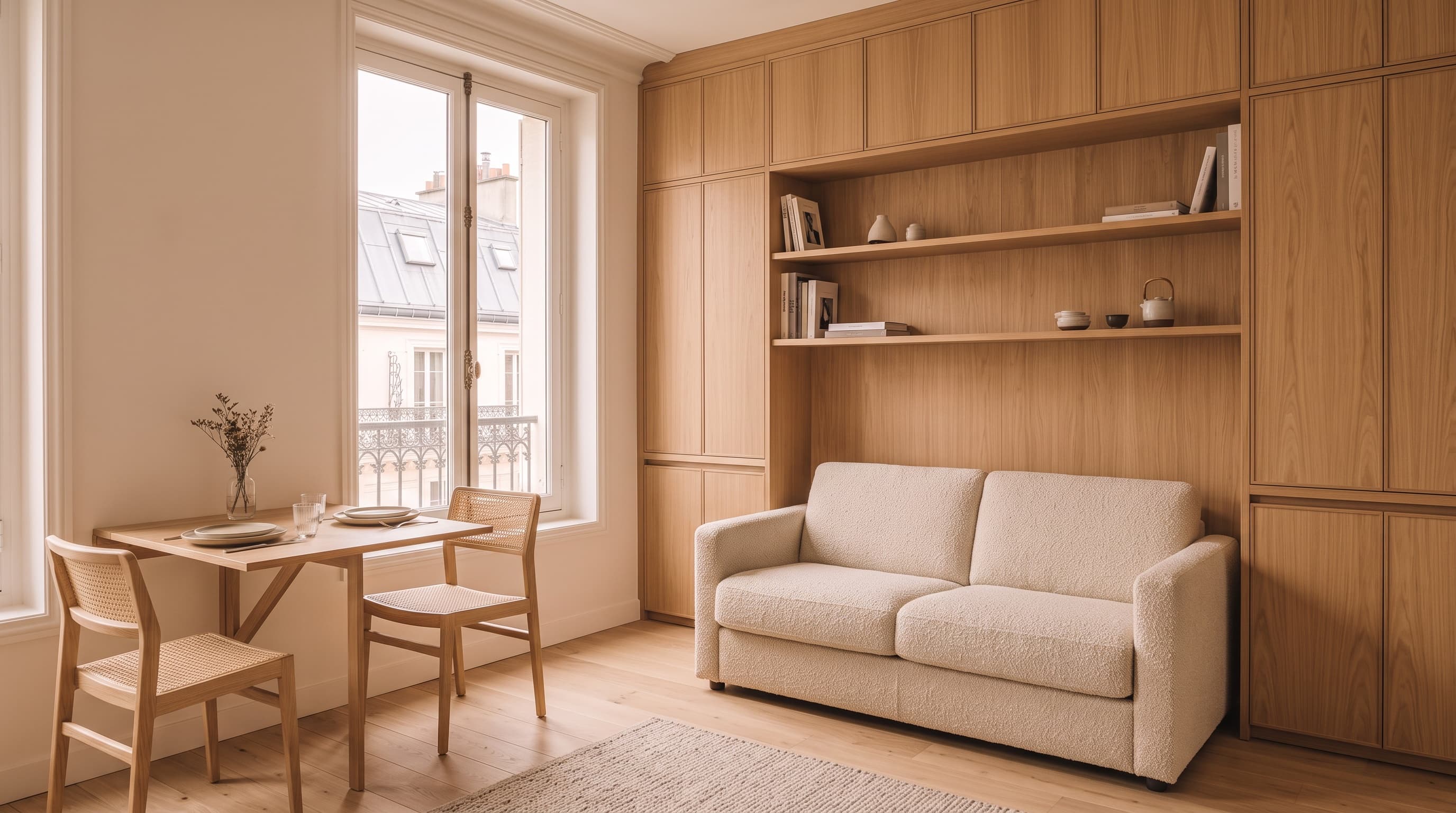
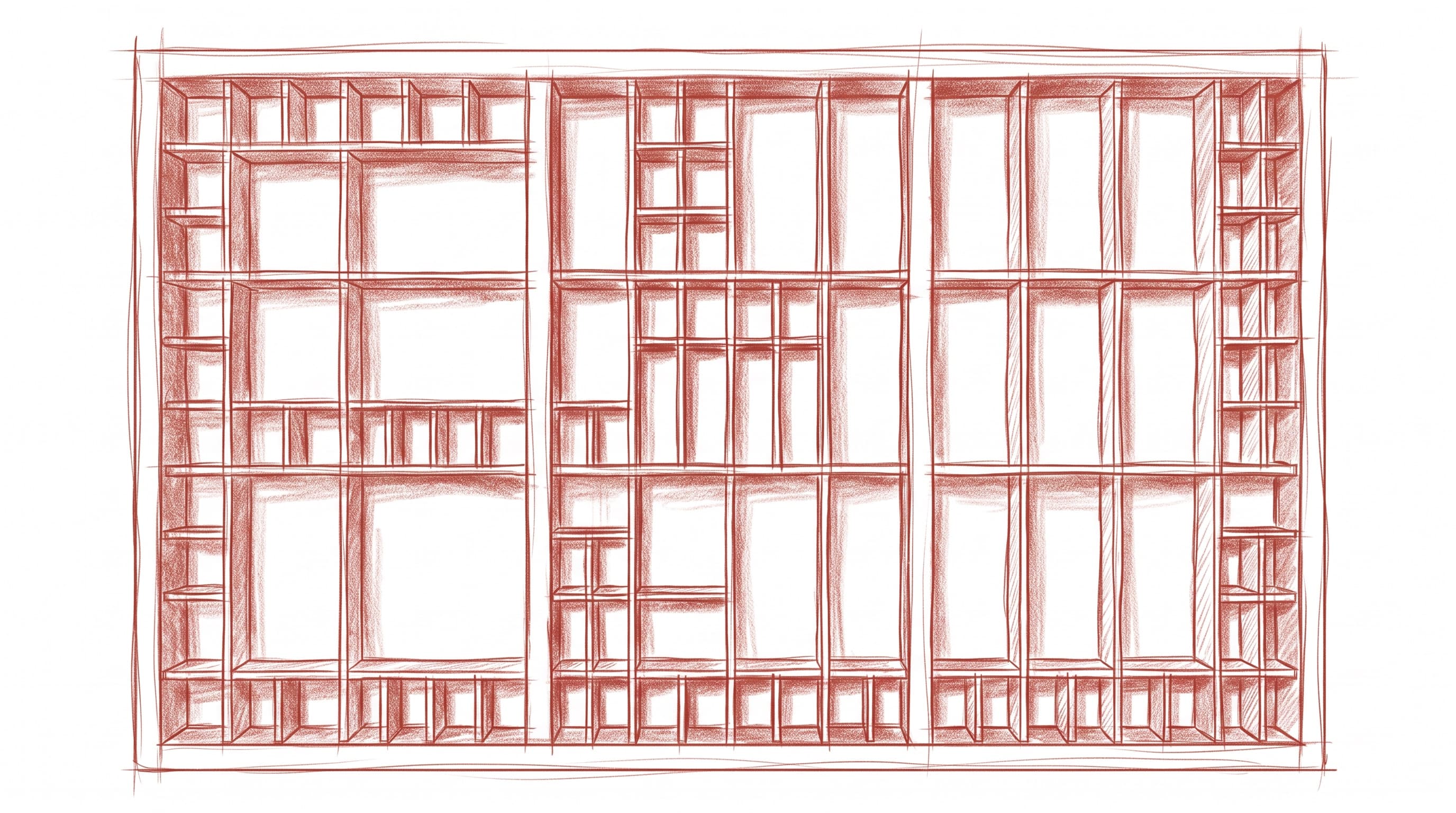
- The largest share, by far: plumbing, electricity, partitions, floors, paint, and all the joinery — including fitted pieces, the furniture that becomes part of the walls: bookcases, wardrobes, built-in storage.
- The equipment
- The kitchen and the bathroom above all: units, appliances, taps, tiling. A line where the gap between two projects can be considerable.
- The furniture
- What does not hold to the walls and is paid for separately: a table, a desk, a headboard, a sofa — designed to measure or chosen elsewhere.
- The design
- The interior architect's work: the plans, the perspectives, the file. One line of the budget, known in advance.
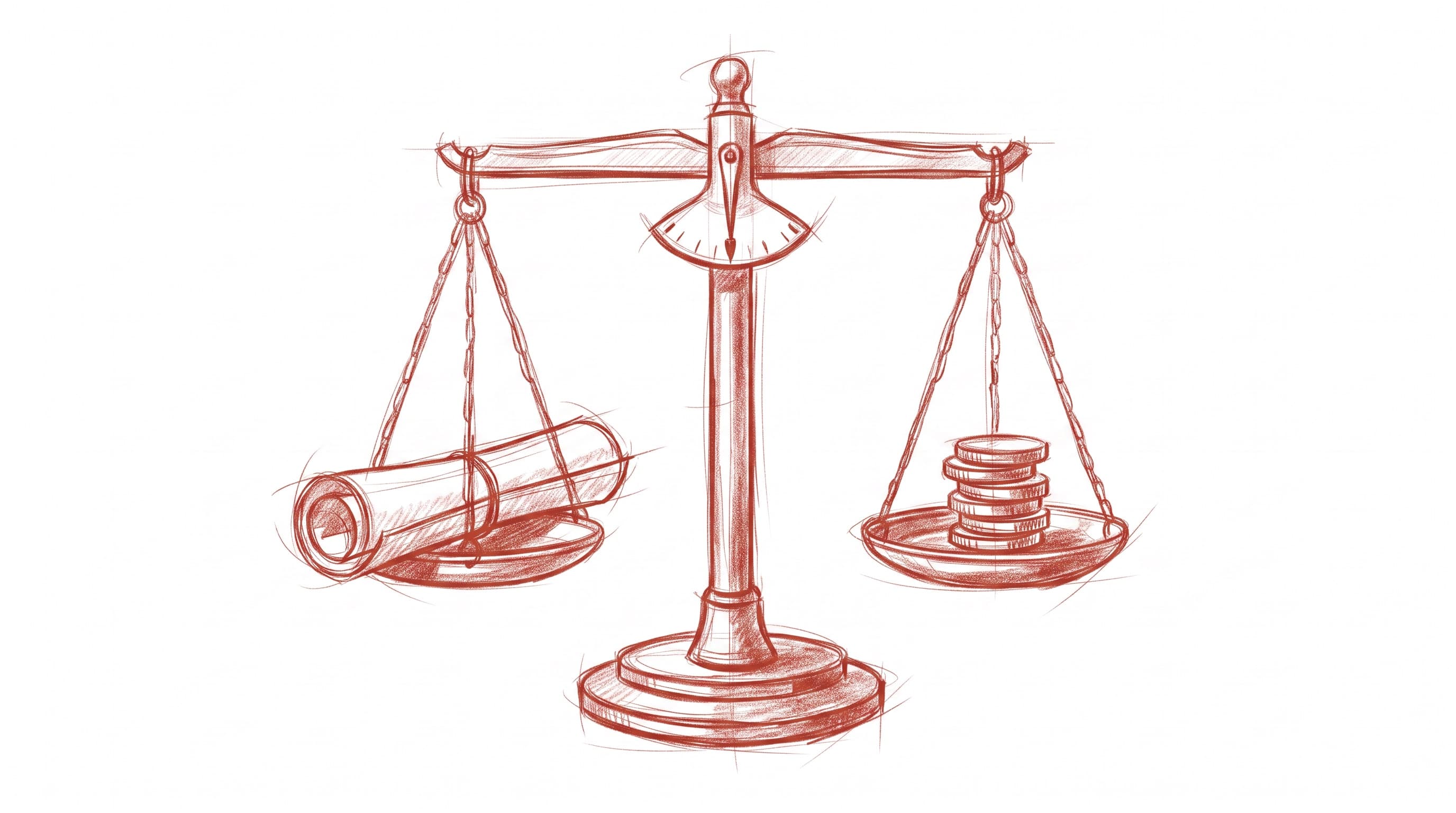
To these four families a fifth line is added, which is not a cost but a reserve: contingency.
It is not the surface that makes the budget, it is the choices.
What weighs most
In an older apartment, water and electricity account for a large share of the works budget. Moving a kitchen or a bathroom means reworking services, sometimes along the whole length of the apartment — and those are expensive metres.
Then comes the level of finish, which has almost no upper limit. The same apartment, with the same plan, can double depending on materials, taps, handles, lighting. That is where most of the gap between two quotes is decided — far more than in the surface area.
What almost everyone forgets
Contingency, first. In an old building, you only know what is behind a wall or under a floor once it is open. Professionals recommend setting aside around 10 to 15% of the works budget — money you may never spend, but which saves you from having to choose between stopping the job and giving up half the project.
Finally, what is not building work but belongs to the project: storage, the move, somewhere to live during the works if you cannot stay. And a useful reflex when comparing quotes: check that they all include tax, and that they cover exactly the same scope.
What you can act on
A budget is steered by the plan, not by the calculator. Keeping the kitchen where it is when possible, choosing not to touch the services in one room, deciding where made-to-measure is worth it and where a shop-bought piece will do perfectly well: those decisions, taken at the drawing stage, are worth more than any haggling over quotes.
It is also why the plan is drawn before anything is priced, and not the other way around: every drawing decision is a budget decision.
Where design fits in
Design is one line among the others, and it is the most predictable: we charge a fixed fee, based on the work time your project requires, never a percentage of your works. So we have no interest whatsoever in the other lines swelling.
Our role is in fact the opposite: to arbitrate with you, line by line — what must be done once and for all, what can wait, and what is kept. Tell us your budget, and we design the project that makes the most of it.
Your questions
How much should be set aside for the unexpected?
Around 10 to 15% of the works budget is the provision professionals in the sector recommend. In an old apartment it is often used: a tired floor structure, ageing services, a surprise under the tiles.
What share does the design represent?
With us it is a fixed fee, agreed before starting: it depends on the time your project requires — the number of rooms to rethink, the furniture to design, the level of detail expected — and not on what your works cost. Elsewhere, design is often billed as a percentage of the works: its share then varies with the job.
Does made-to-measure fall within the works budget?
It depends what we mean. Fitted pieces — bookcases, wardrobes, built-in storage — are part of the job: they are joinery, installed on site, priced with the works. Free-standing furniture is not: a table or a desk is ordered from a craftsman, invoiced separately and often paid later. It is better to give it its own line from the start, so you do not discover at the end of the job that nothing is left to furnish with.